THE ART OF MAKING A LIFE
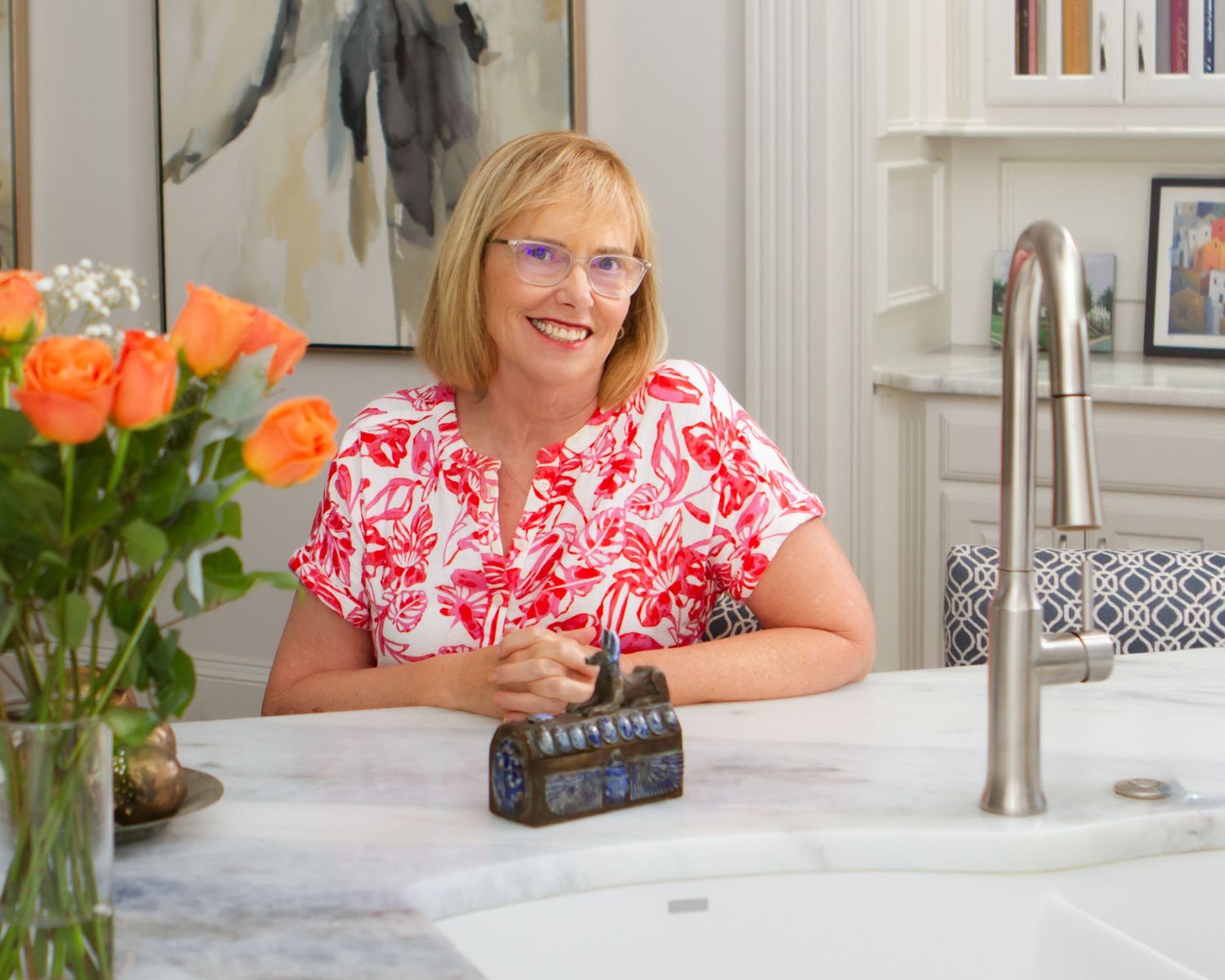
When I walked into Debbie Cooper’s home, I knew almost immediately that there were stories everywhere. Not because she began telling them to me, but because the rooms themselves seemed to hold them—in the books, the art, the photographs and the things she had chosen to surround herself with.
Spend a little time with Debbie and you begin to understand that those things are connected to something much bigger.
One of the first things she told me was, “Traveling is my biggest luxury, and I’d rather have experiences than things.”
And stepping into those experiences seems to be a theme with Debbie.
She doesn’t travel simply to see a place. She rides horses through New Zealand, participates in women’s ceremonies in Bali, crawls through tunnels in Vietnam and stands where tectonic plates meet in Iceland. In Africa, she found something even more lasting: perspective.
But that desire to see and understand the world started long before Debbie ever traveled it.
She grew up an only child in a small town in southern Arkansas. She remembers being lonely at times, but she was curious about a world she had not yet seen. Long before she could travel to faraway places herself, books took her there. She lost herself in stories, imagining other lives and discovering people and places very different from her own.
Her father opened the world in another way.
“My mom had very high expectations. She wanted me to be the best,” Debbie told me. “My dad loved unconditionally.”
Her father loved horses and took Debbie riding at her grandparents’ farm. They rode in local parades, invited friends along and, as Debbie puts it, “He and I had some escapades.”
Around 50, she returned to horseback riding in remembrance of her dad.
Decades after those childhood rides, there she is in one of her travel photographs—on horseback again, this time surrounded by the mountains of New Zealand.
I love that connection.
Because the more I got to know Debbie, the more I realized that her life isn’t a collection of unrelated chapters—science, teaching, family, real estate, remodeling, books, travel. One seems to lead naturally into another, connected by something that has been there from the beginning:
curiosity.
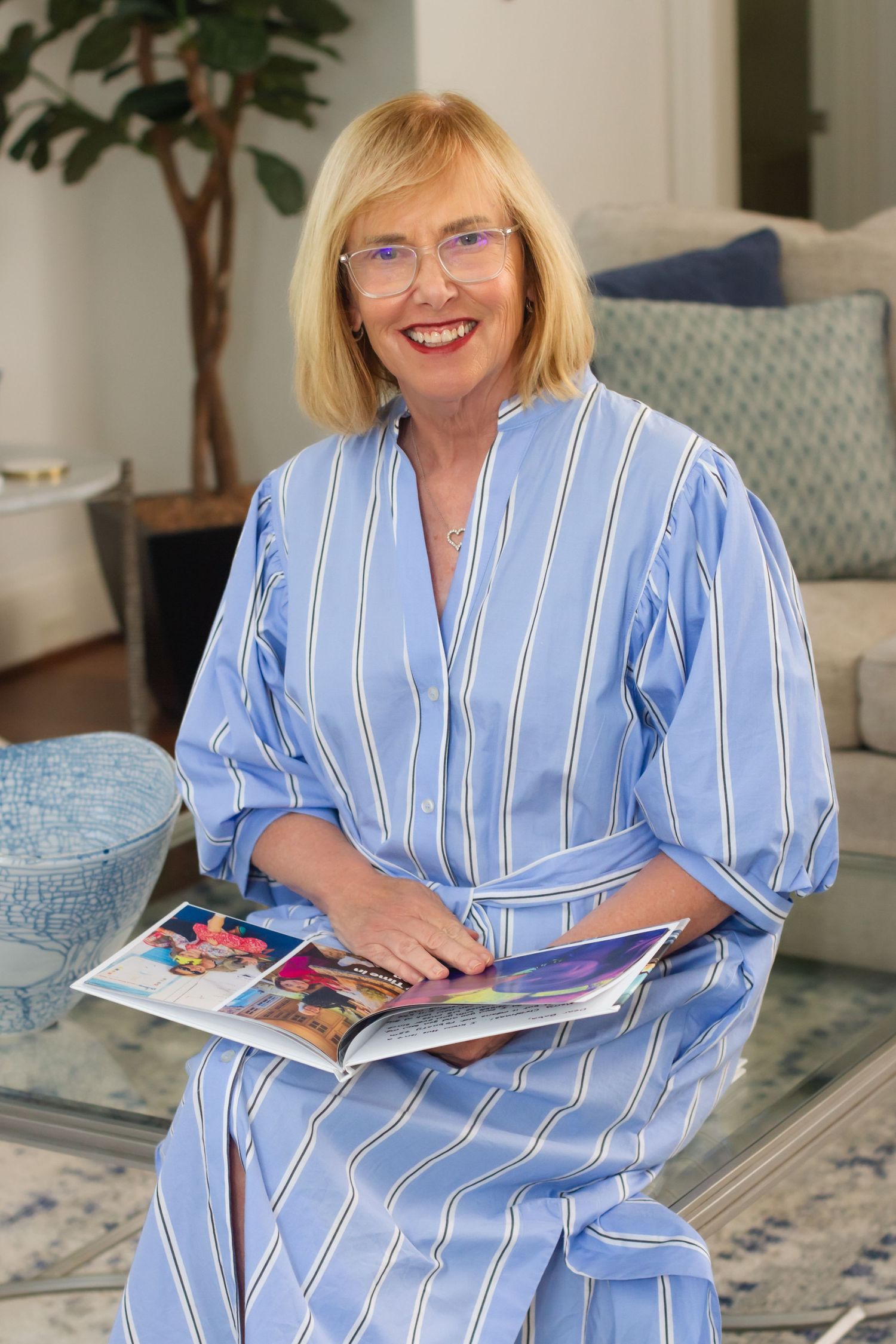
Holding a book created especially for her by her granddaughter, Avery.
A Mind That Wants to Know
Debbie has always been curious.
She has the kind of mind that wants to understand how things work. Science came naturally to her. So did math. She earned her degree in Earth Science–Zoology and went on to teach, but her curiosity has never stayed neatly inside one subject.
She reads. She studies. She notices things. And when something interests her, she wants to know more.
That combination of logic and creativity runs through almost everything Debbie does. She can look at a problem analytically, work through the details, and still trust the instinct that tells her when something simply feels right.
It shows up in the way she travels, the way she designs a room, and even in the way she approaches life.
There is always something more to learn.
An Eye for What Could Be
Debbie didn't set out to become a designer. It grew naturally from her years in real estate.
Working with clients gave her an opportunity to see house after house—and to recognize how much the right changes could transform a space. She began helping clients see possibilities they hadn't considered, finding ways to improve not only how a home looked, but how it felt.
And she discovered she was very good at it.
Over the years, Debbie has designed and remodeled a number of homes, including several of her own. She doesn't just choose the finishes. She understands the entire process—from imagining what a room could become to figuring out how to make it happen.
That takes more than a good eye.
Debbie is extremely organized. She thinks ahead, keeps track of the details, orders materials so they're ready when they're needed and coordinates the moving pieces of a project. In many ways, she has become her own general contractor.
This is where the different sides of Debbie's mind come together. She can manage the practical details of a project while still responding instinctively to color, texture, proportion and the feeling of a room.
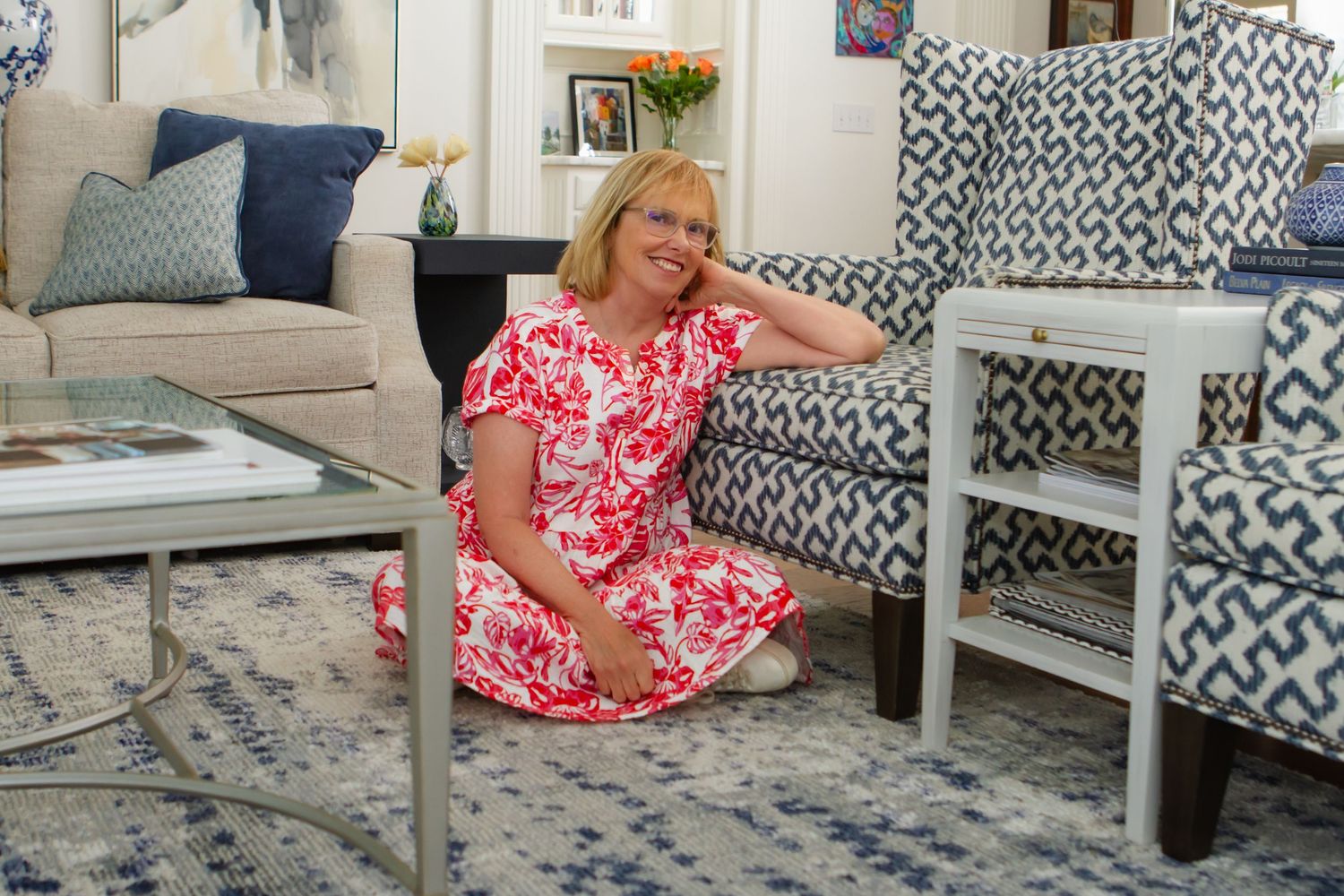
Her own home may be the best example. Every room seems to have a starting point: a painting, a piece of furniture, a color, a material she loves.
“I start with one item and build from there,” she told me.
Sometimes, she's willing to wait a long time for the right place to build around it.
The book-patterned wallpaper in her home traveled with Debbie through three different houses. She loved it, but none of those spaces felt quite right. So she kept it until she found the room where it belonged.
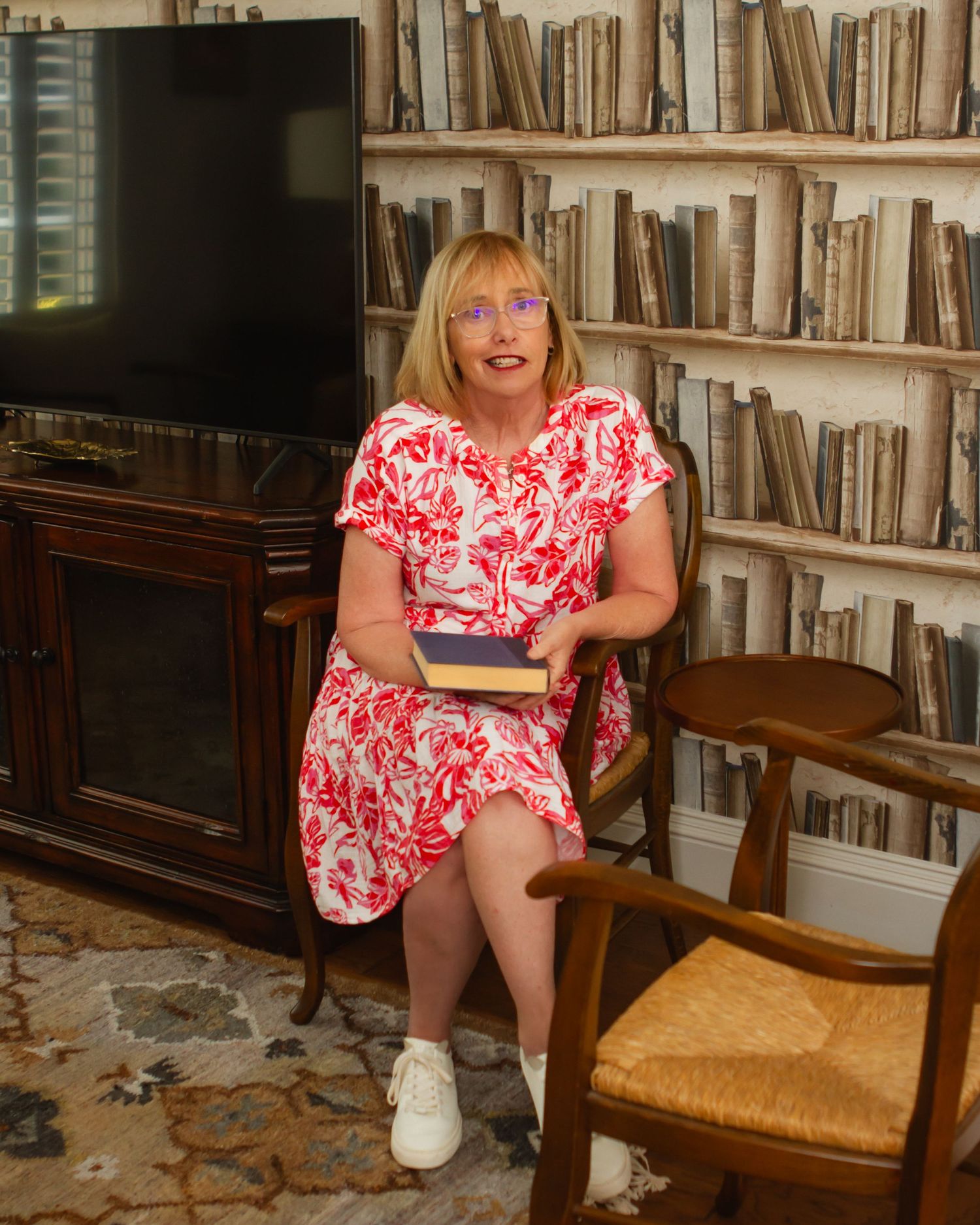
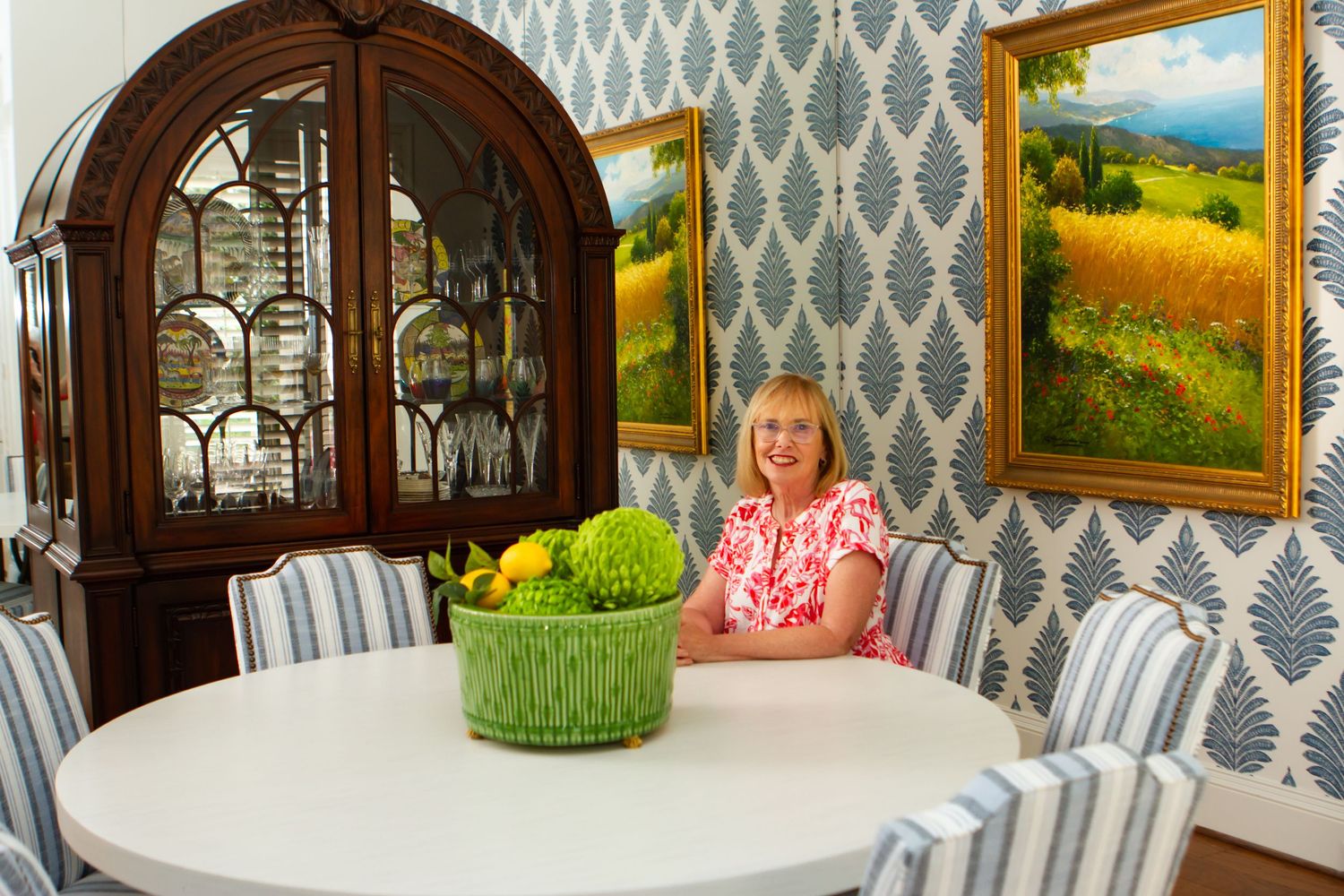
“I start with one item and build from there.” — Debbie
Making It Her Own
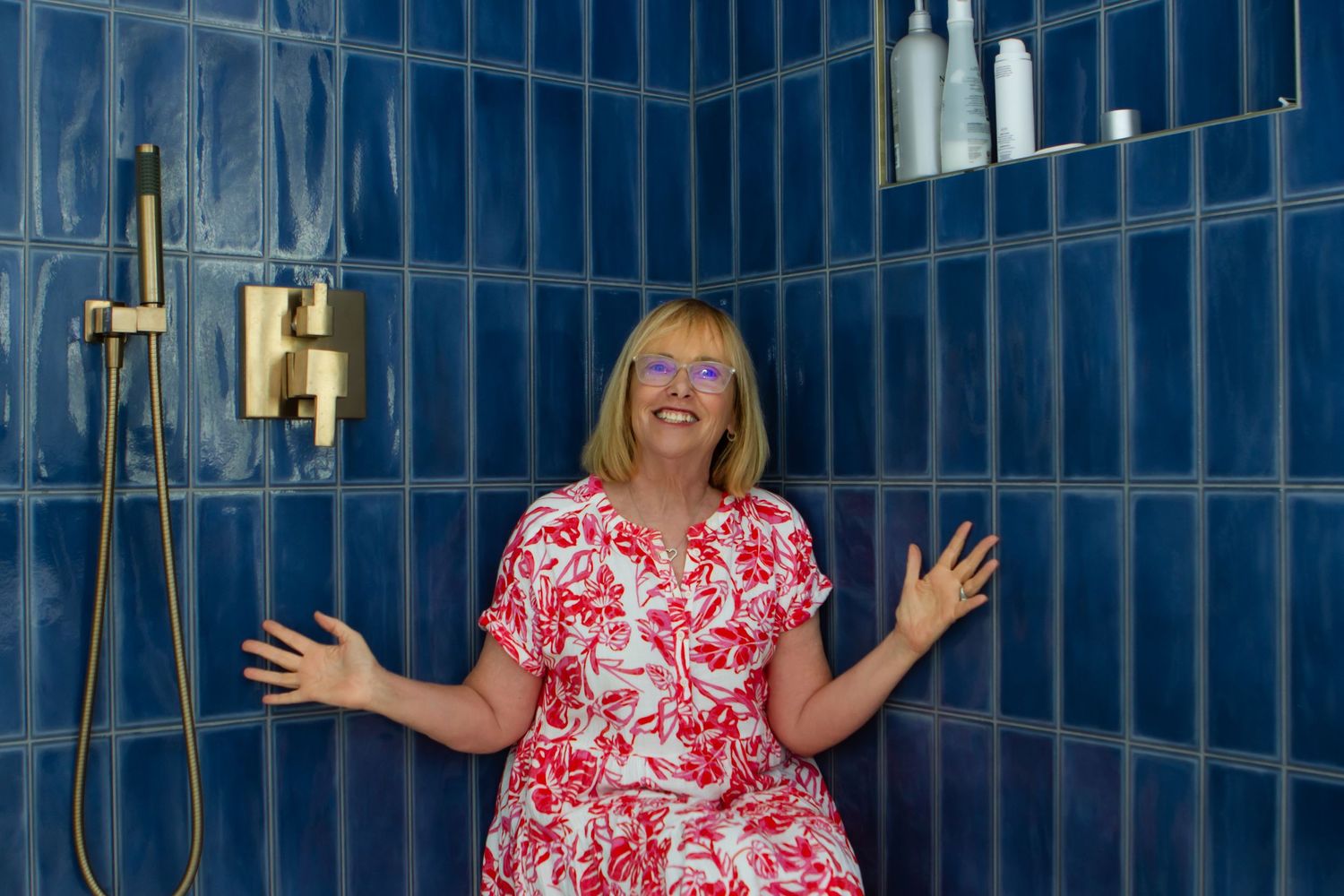
Debbie’s home is filled with examples of what happens when she trusts her own eye. She isn’t afraid of pattern, color or an unexpected choice—and she doesn’t seem particularly interested in following a formula.
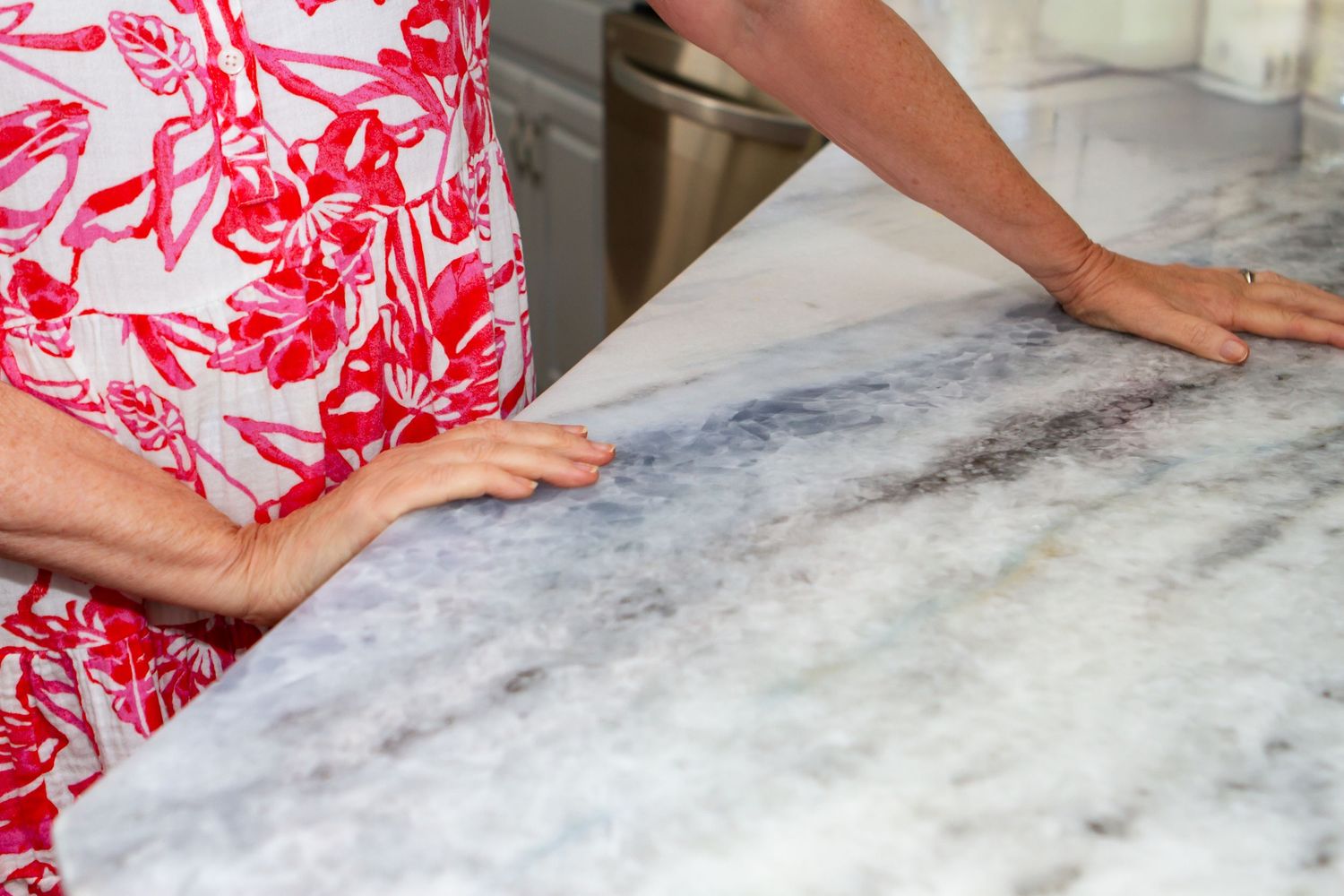
In the kitchen and bathrooms, those choices become more permanent. Dolomite appears in both, while a striking blue tile in the bathroom brings in the color and personality she loves.
What I noticed as I photographed her home was that nothing felt chosen simply because it was “safe.” There is thought behind it, but there is also confidence.
She knows what she likes. And she’s learned to trust it.
The World She Brought Home
The things Debbie brings home from her travels are rarely just souvenirs.
They are pieces of a place. A memory she can touch.
Walk through her home and the world begins to appear in unexpected places. A palette-knife painting from Dublin hangs above her bed. Antique pomegranates from Istanbul sit on a table. An intricate piece from Egypt holds miniature canopic jars, modeled after those used thousands of years ago. Art and handmade pieces from Australia, Botswana, Cuba and Croatia have found their way into the rooms she lives in every day.
And she can tell you the story behind each one.
Even that heavy wooden cutting board from Australia has become more than a beautiful piece of wood. She bought it near the beginning of a long trip, before considering that she would have to lug the thing around with her for the rest of the journey. 😂 Today, part of what makes it a treasure is the journey it took right along with her.
That’s what I began to understand about the things in Debbie’s home.
They aren’t reminders that she went somewhere. They’re reminders of what happened while she was there.
And perhaps that’s why they fit so naturally into the rooms she creates. Debbie isn’t decorating with objects from around the world.
She’s surrounding herself with pieces of a life she’s lived.
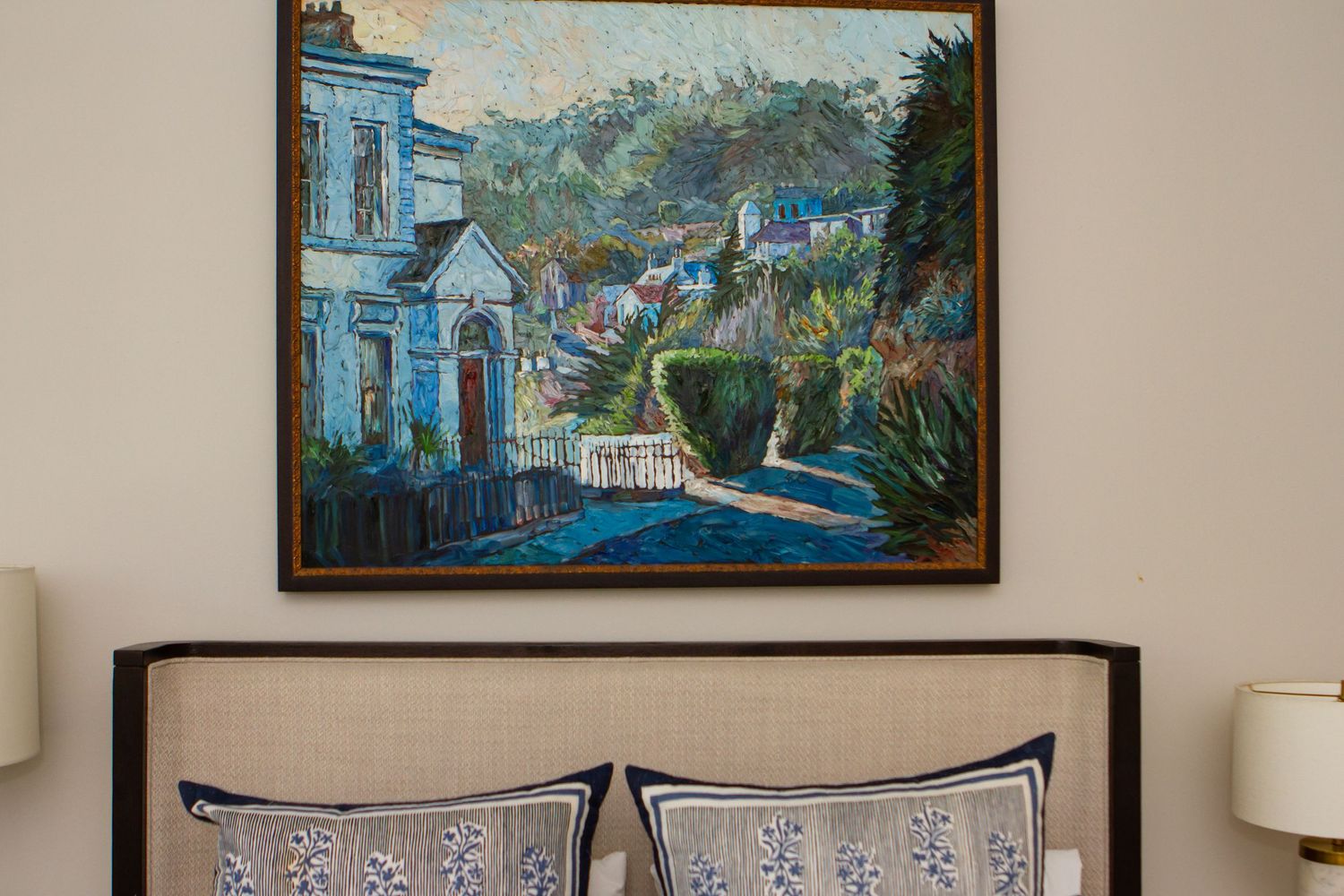
IRELAND - Dublin palette-knife painting
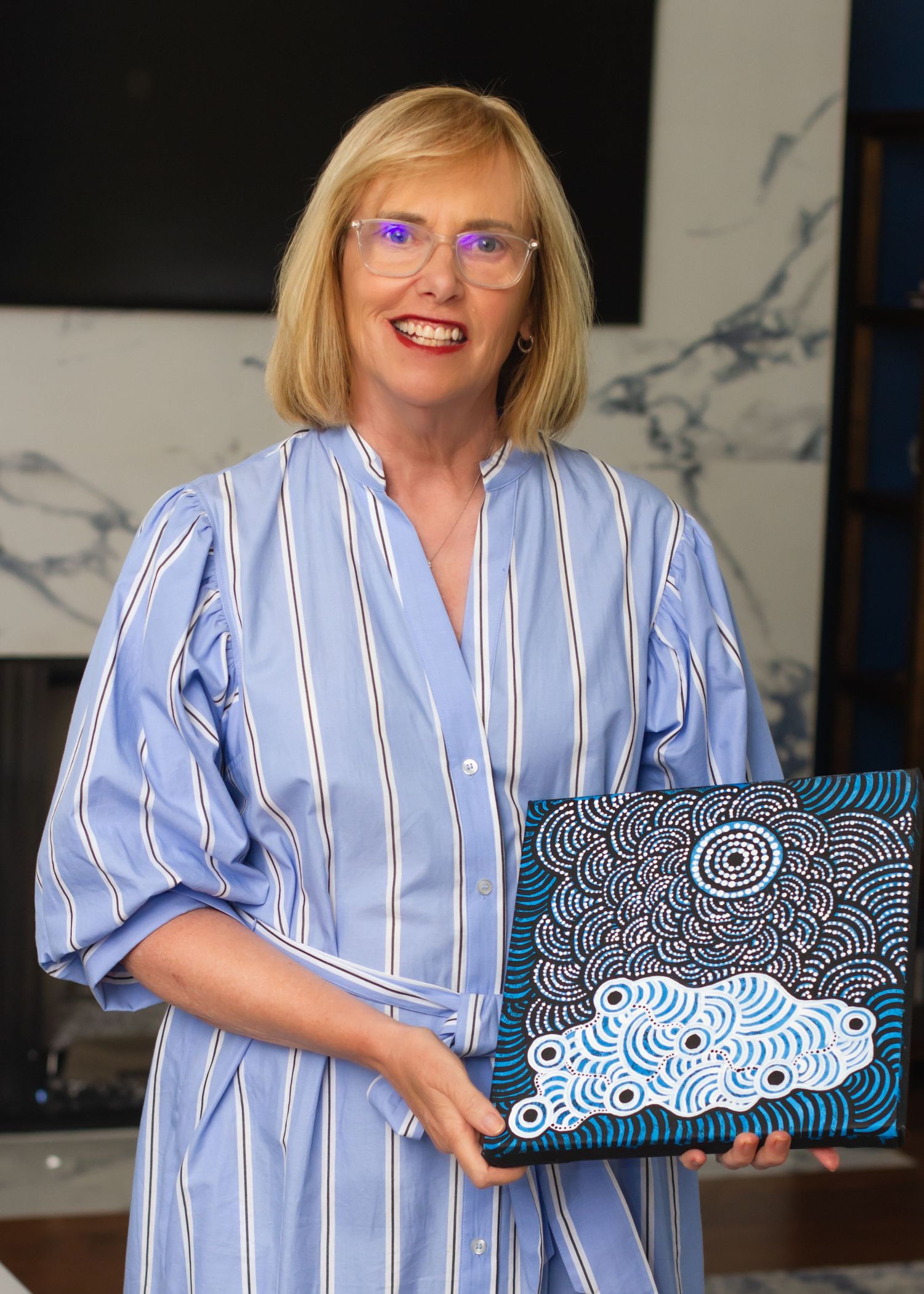
AUSTRALIA - Aboriginal art
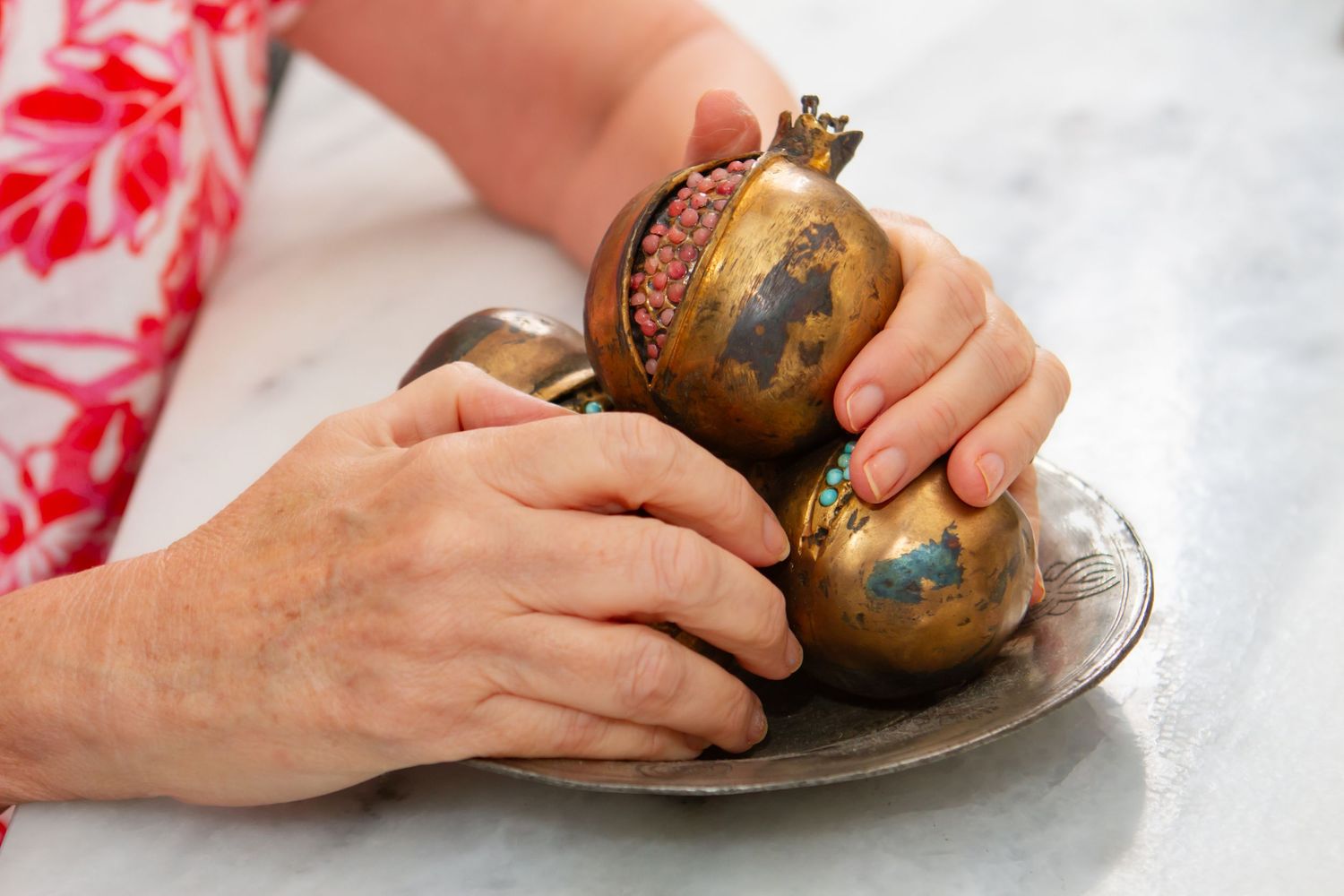
TURKEY - Antique pomegranates
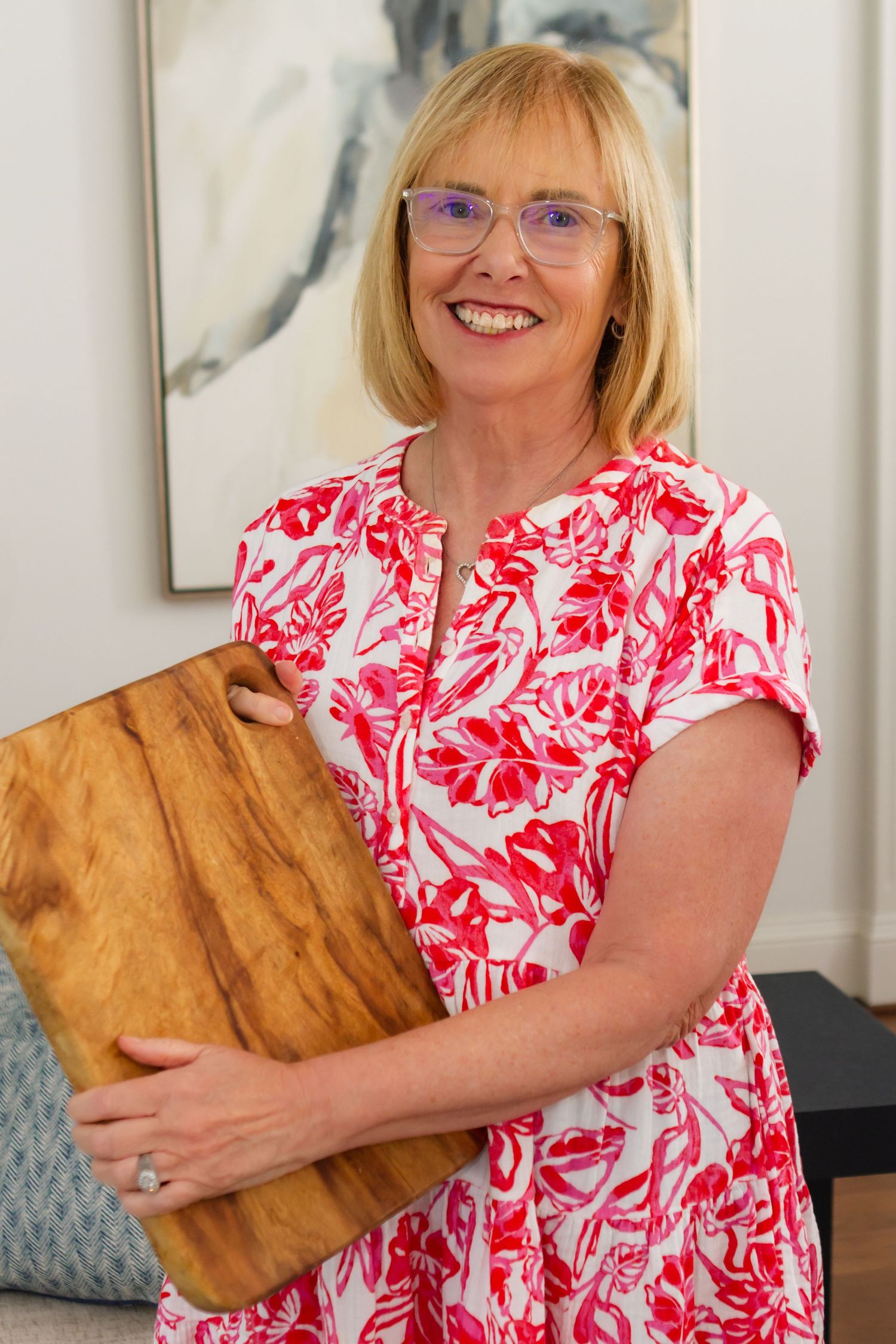
AUSTRALIA
The cutting board that traveled, too 😂
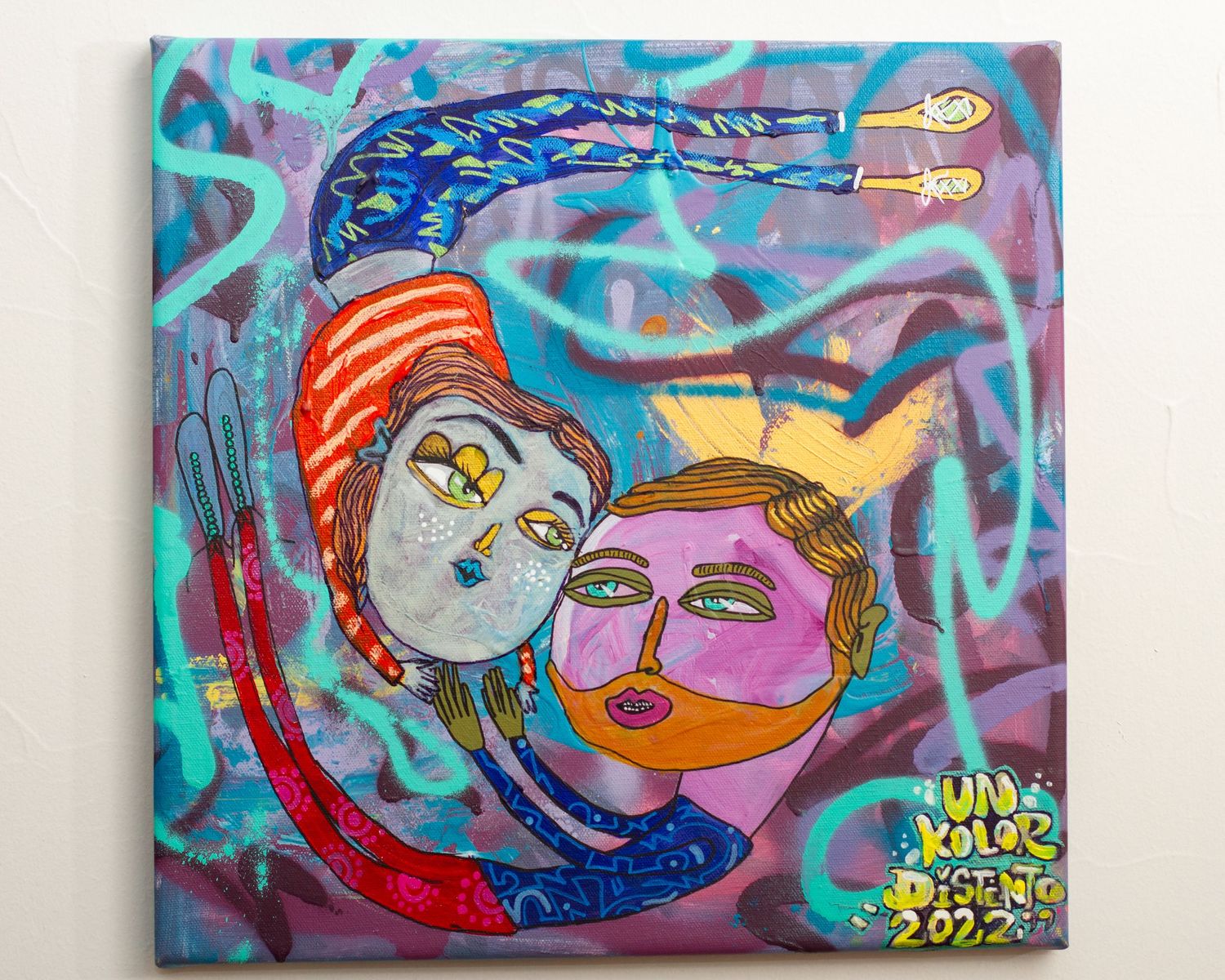
SOUTH AMERICA
A piece by a husband-and-wife graffiti artist team. Each creates one of the two figures—a smaller version of the enormous works they paint across the sides of buildings.
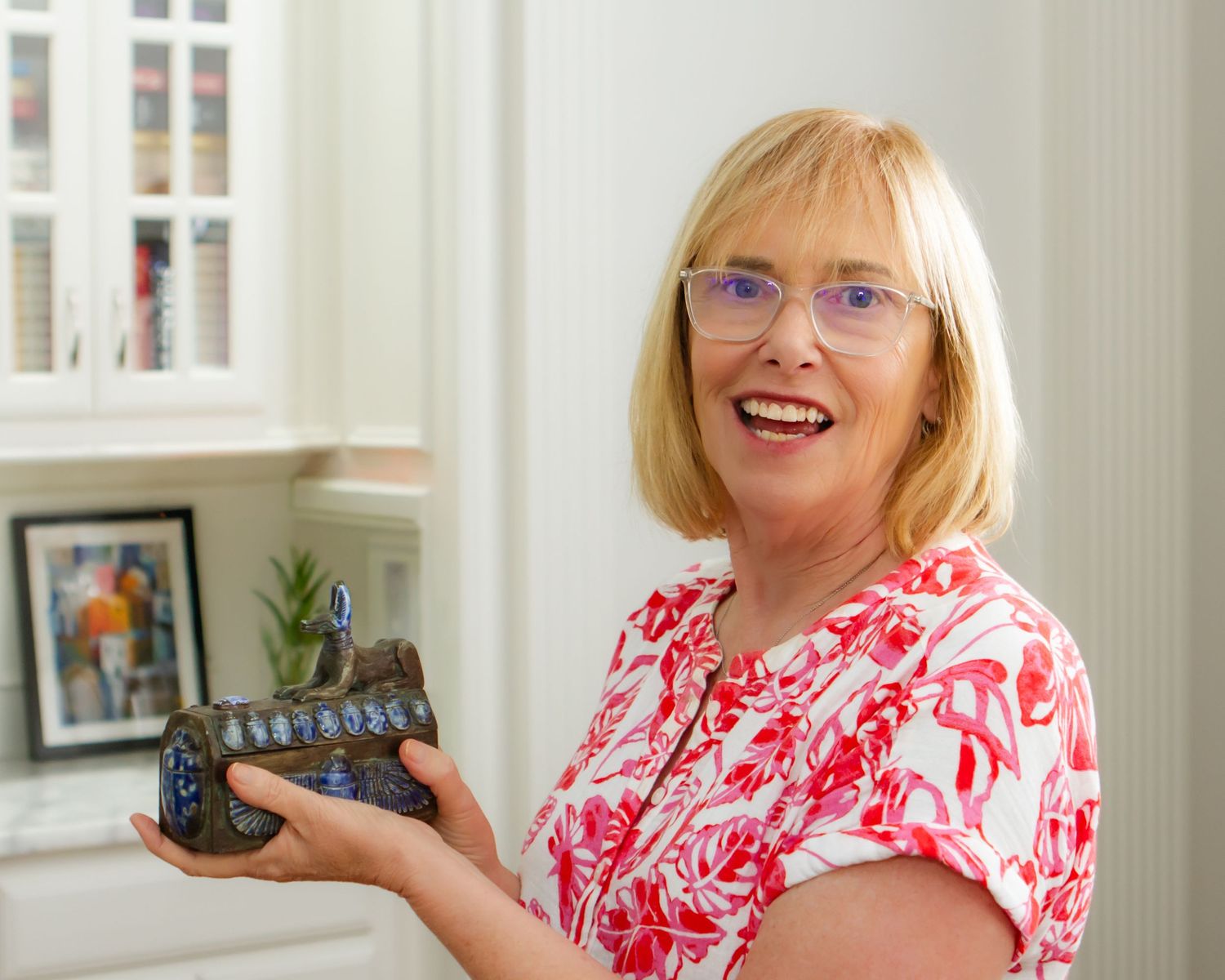
EGYPT
Miniature canopic jars
Experiences Over Things
For Debbie, travel isn’t about collecting countries. It’s about curiosity.
She wants to see how other people live. She wants to understand the history, walk through places she’s only read about and experience cultures different from her own.
That may be one of the best ways to understand Debbie.
She’s stood at the edge of the world in Ushuaia, walked among the cave dwellings of Matera and explored Petra and Amman. But Debbie doesn’t simply arrive somewhere and check it off a list.
She gets into it.
She has ridden horseback through New Zealand, taken part in ceremonies with women in Bali and stood between tectonic plates in Iceland. There is an openness in the way she travels—a willingness to participate rather than simply observe.
Sometimes that means adventure. Sometimes it means being uncomfortable. And sometimes it means seeing the world, and her own place in it, differently.
For her 65th birthday, she chose Egypt.
But when Debbie talks about these places, what strikes me isn’t how many she’s seen. It’s how interested she still is in what she hasn’t seen yet.
There is always another place to go, another culture to learn about, another experience waiting.
As Debbie approaches her 70th birthday, she isn’t finished exploring. Not even close.
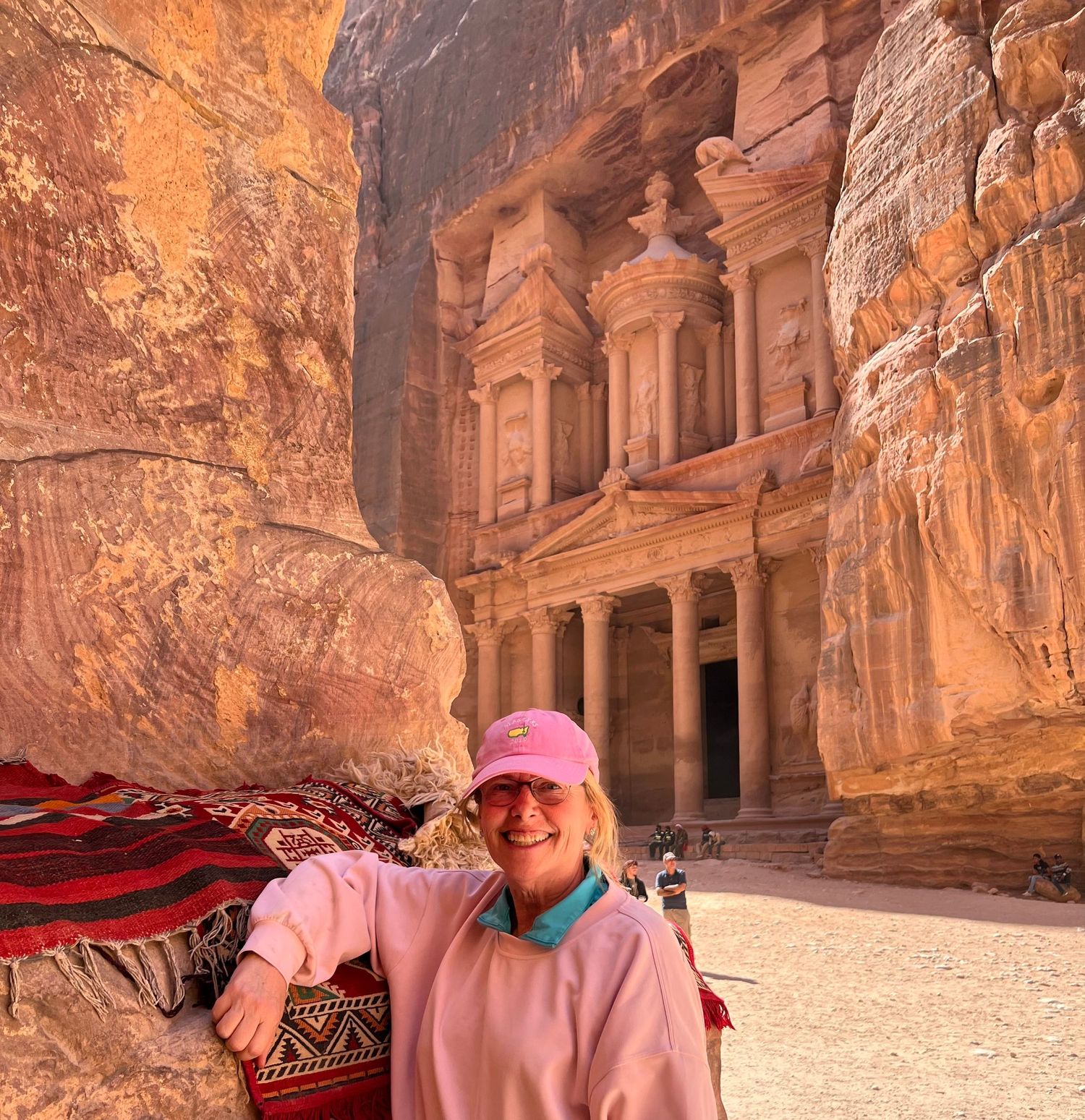
Petra, Jordan — one of the places Debbie once dreamed of seeing
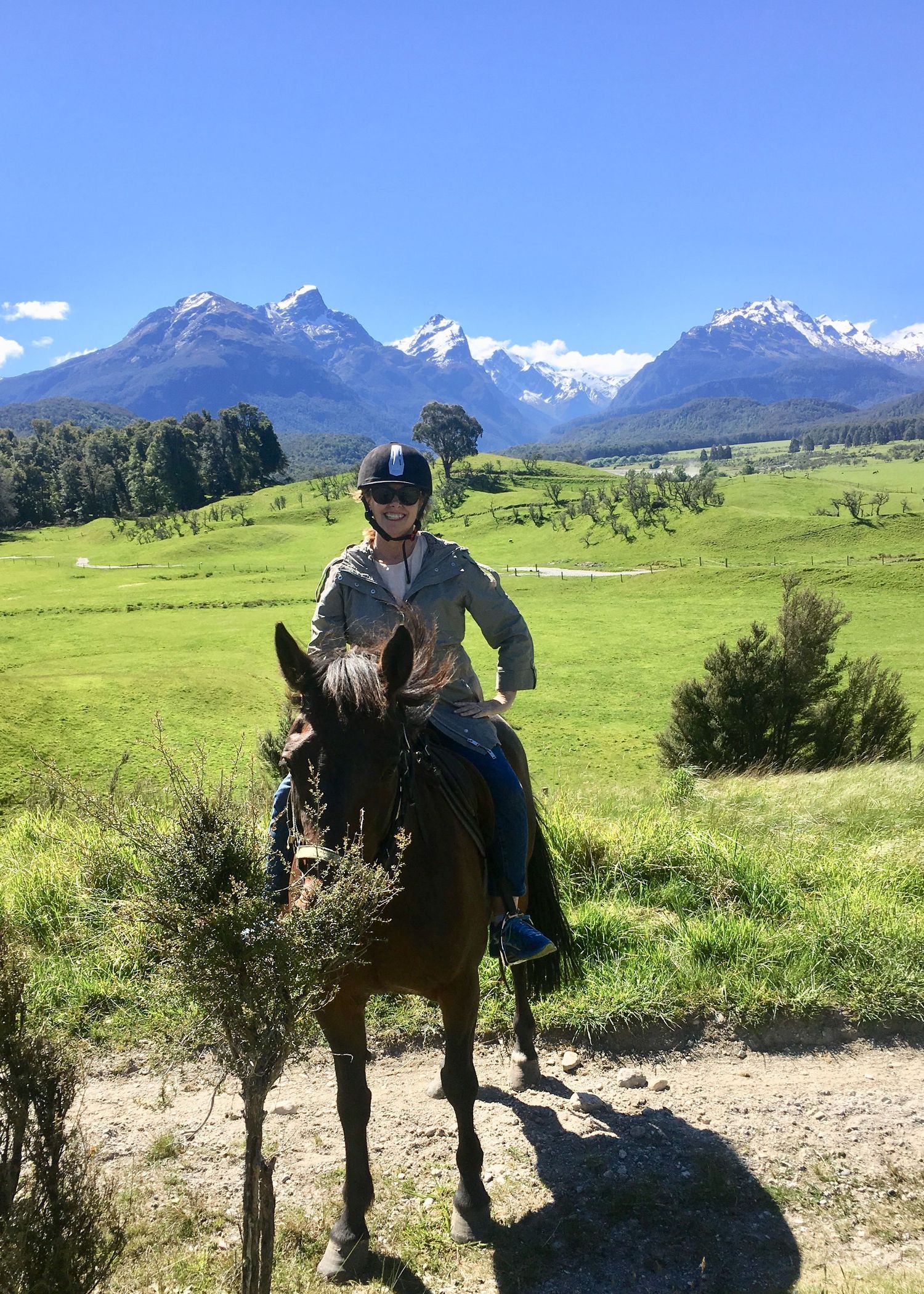
New Zealand — decades after riding horses with her father as a little girl, Debbie found herself back in the saddle on the other side of the world
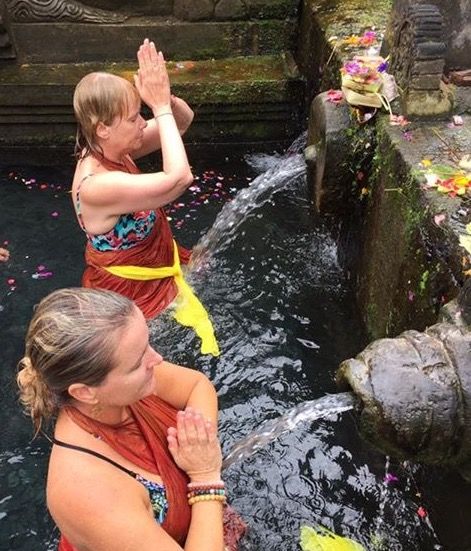
Bali — taking part in a water purification ceremony during a women’s retreat. Debbie has never been content to simply see a place. She wants to step into it.
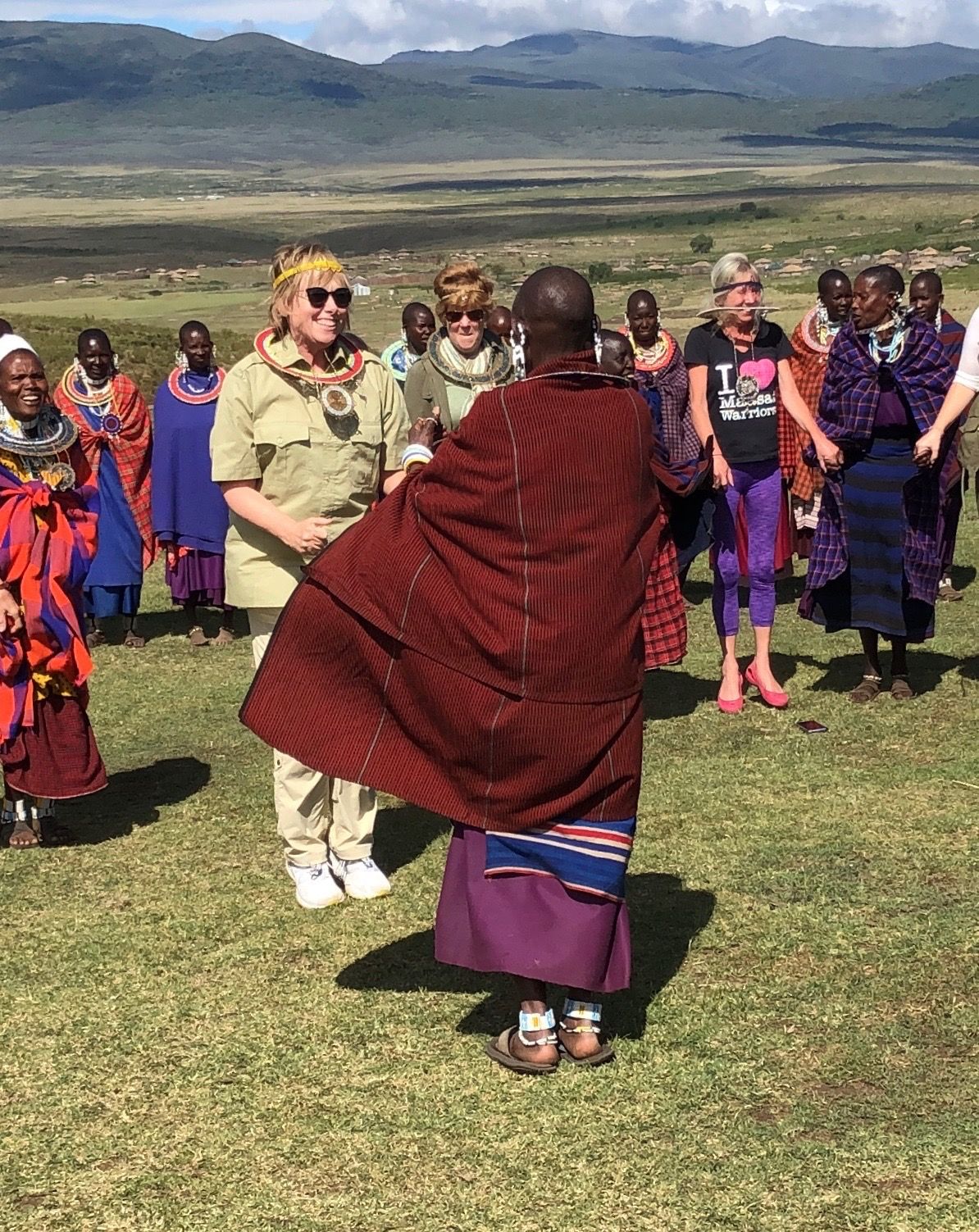
“Africa had such an impact on me.” — Debbie
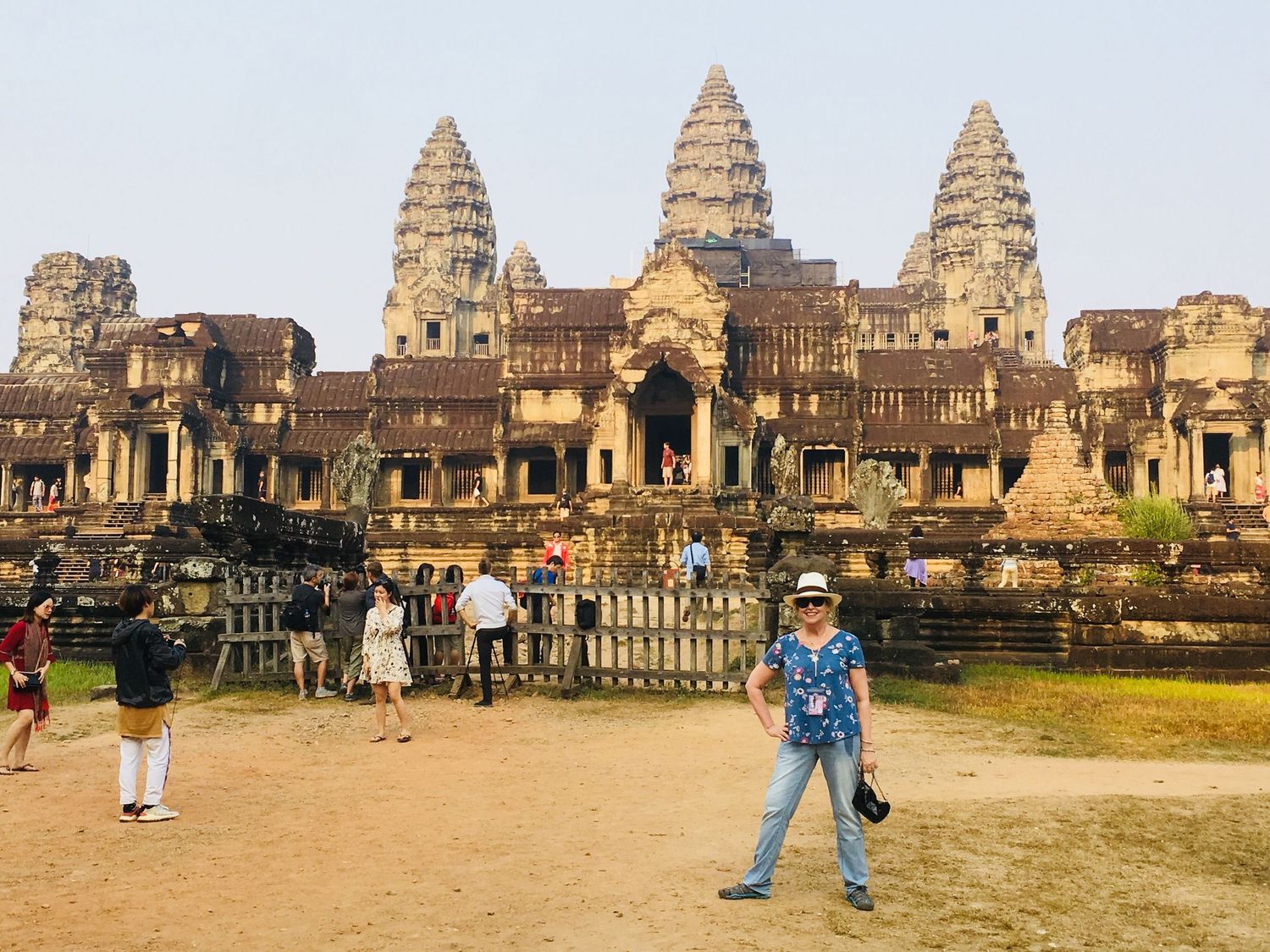
Angkor Wat, Cambodia — watching the sun rise over another place once known only through books.
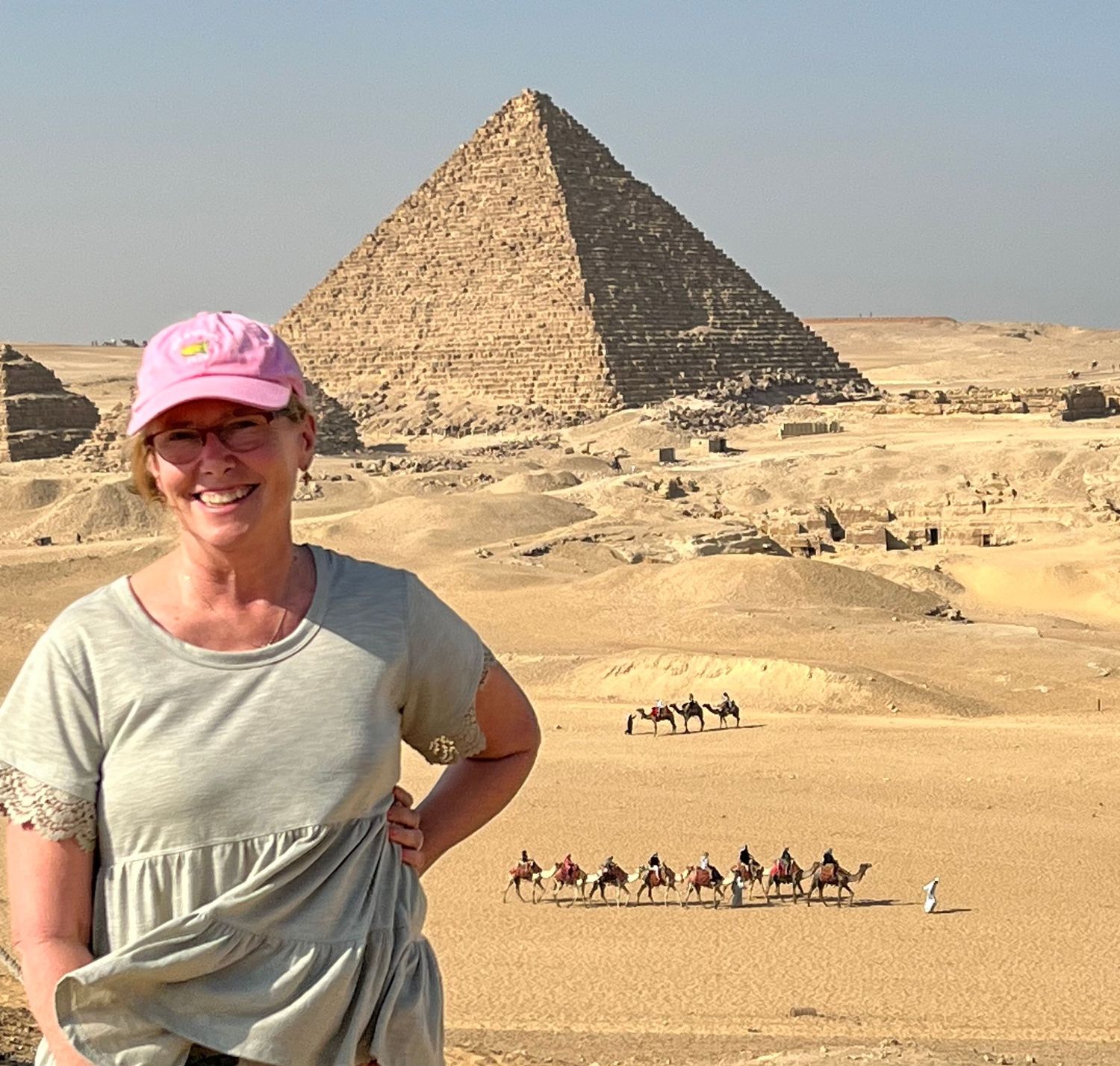
Egypt — a trip Debbie chose for her 65th birthday.
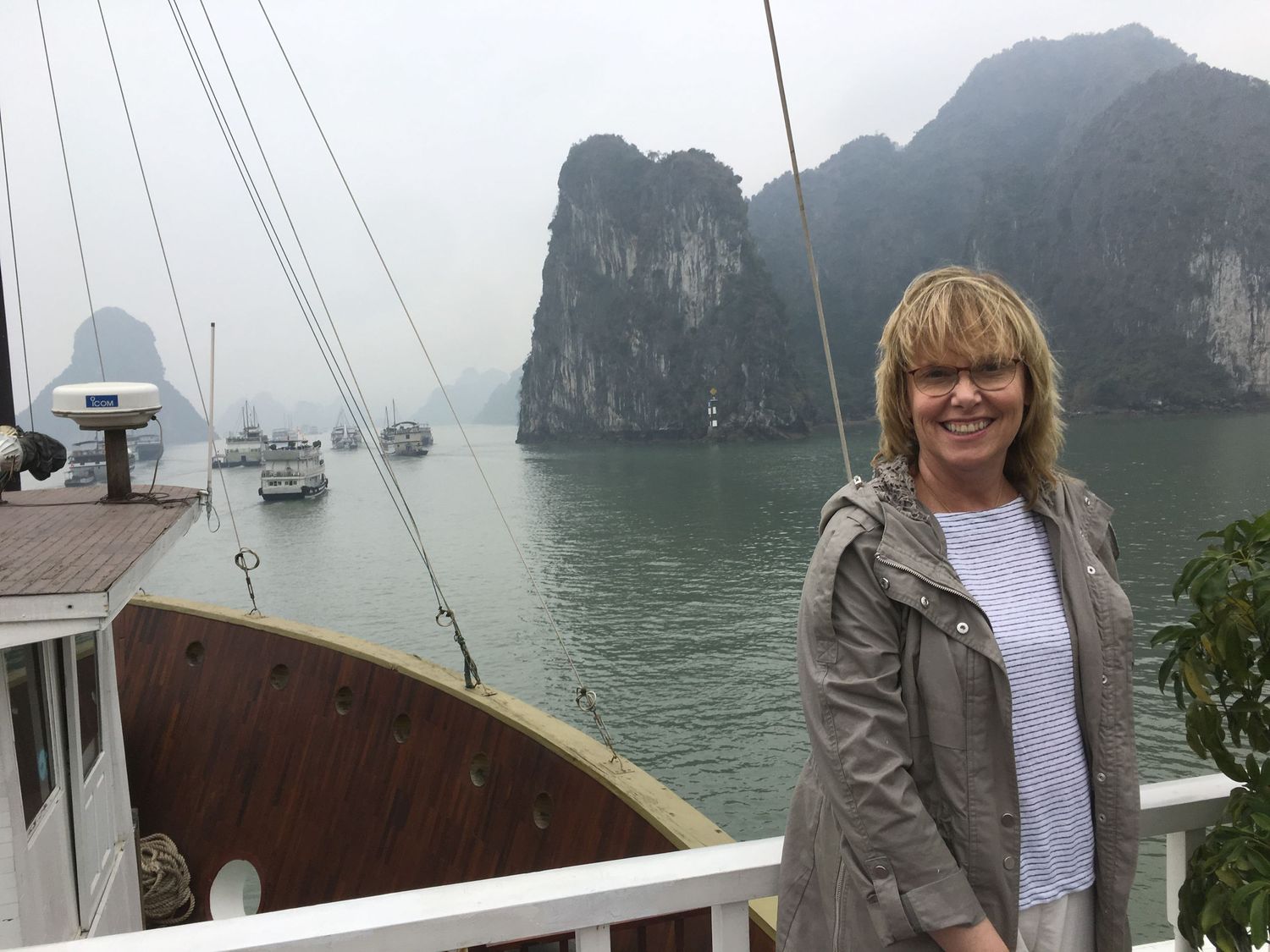
Ha Long Bay, Vietnam — surrounded by limestone cliffs, Debbie was never one to simply admire the view from shore
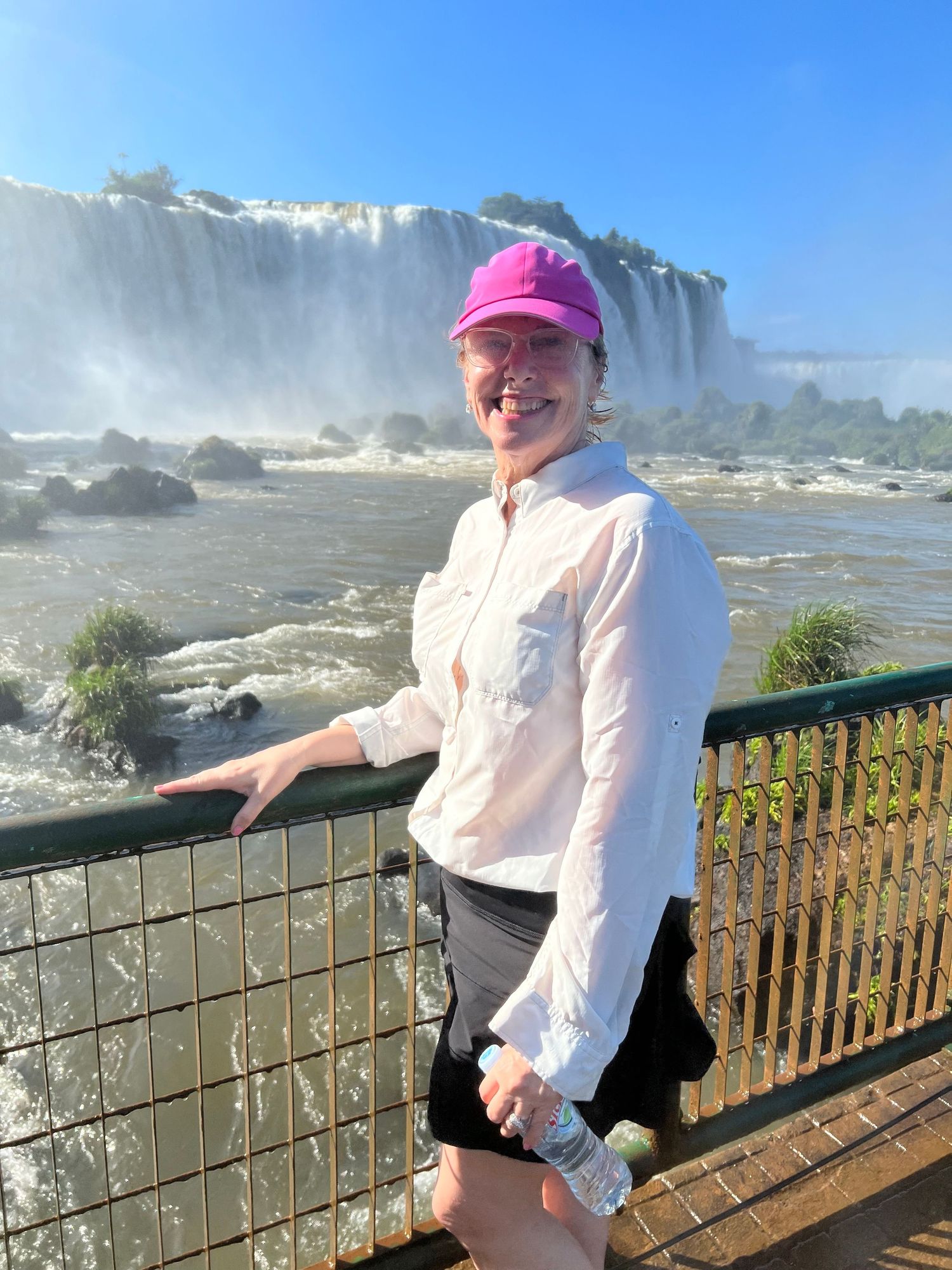
Iguazú Falls, Brazil — Debbie, happily getting close enough to feel the power of it.
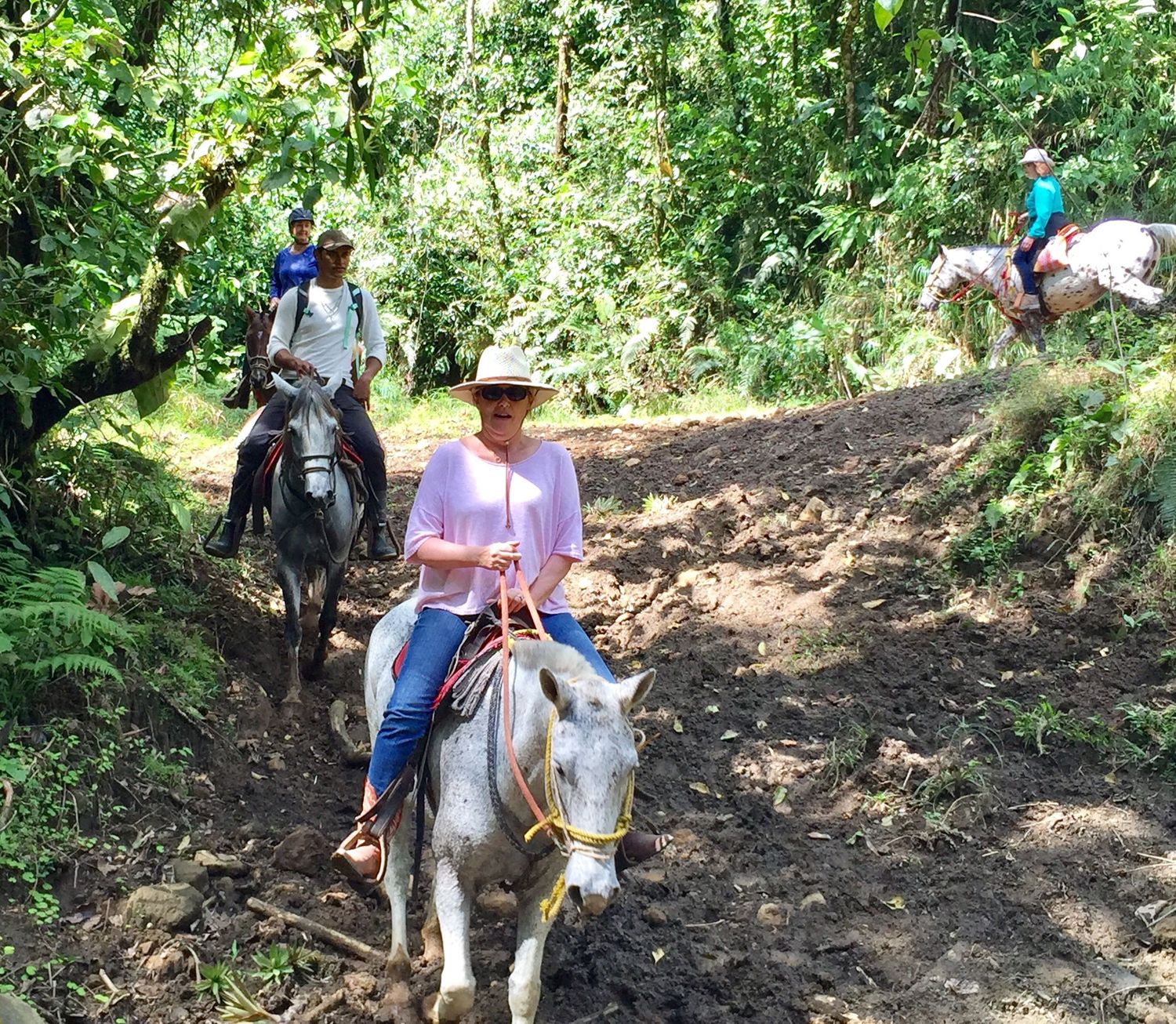
Back in the Saddle
Costa Rica turned out to be one of the more memorable rides. What began as a horseback trip through the rainforest became considerably more adventurous when the trail turned wet and muddy.
“I literally just held on and trusted my horse to slide down the hill,” Debbie remembers.
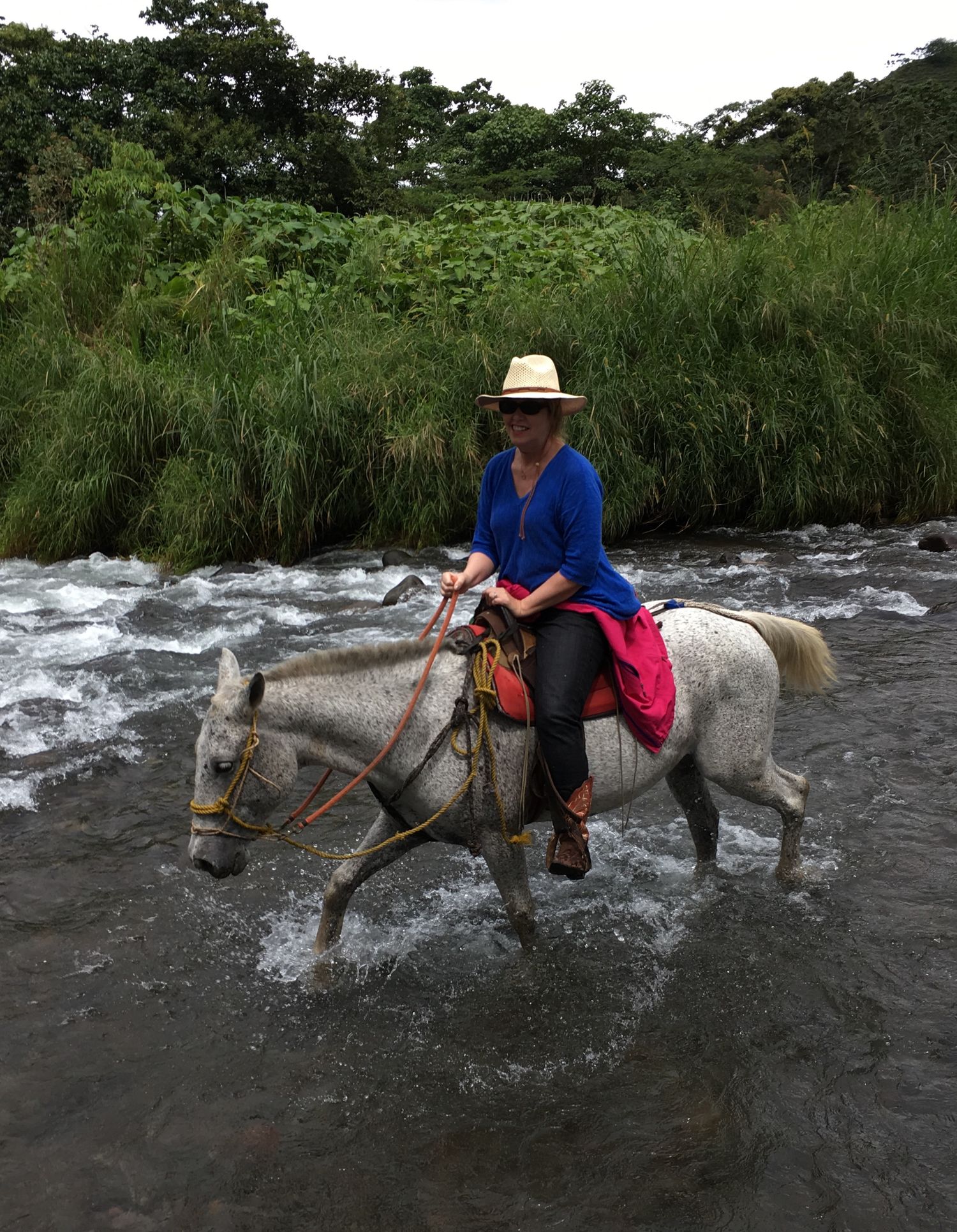
Costa Rica — taking the trail right through the river
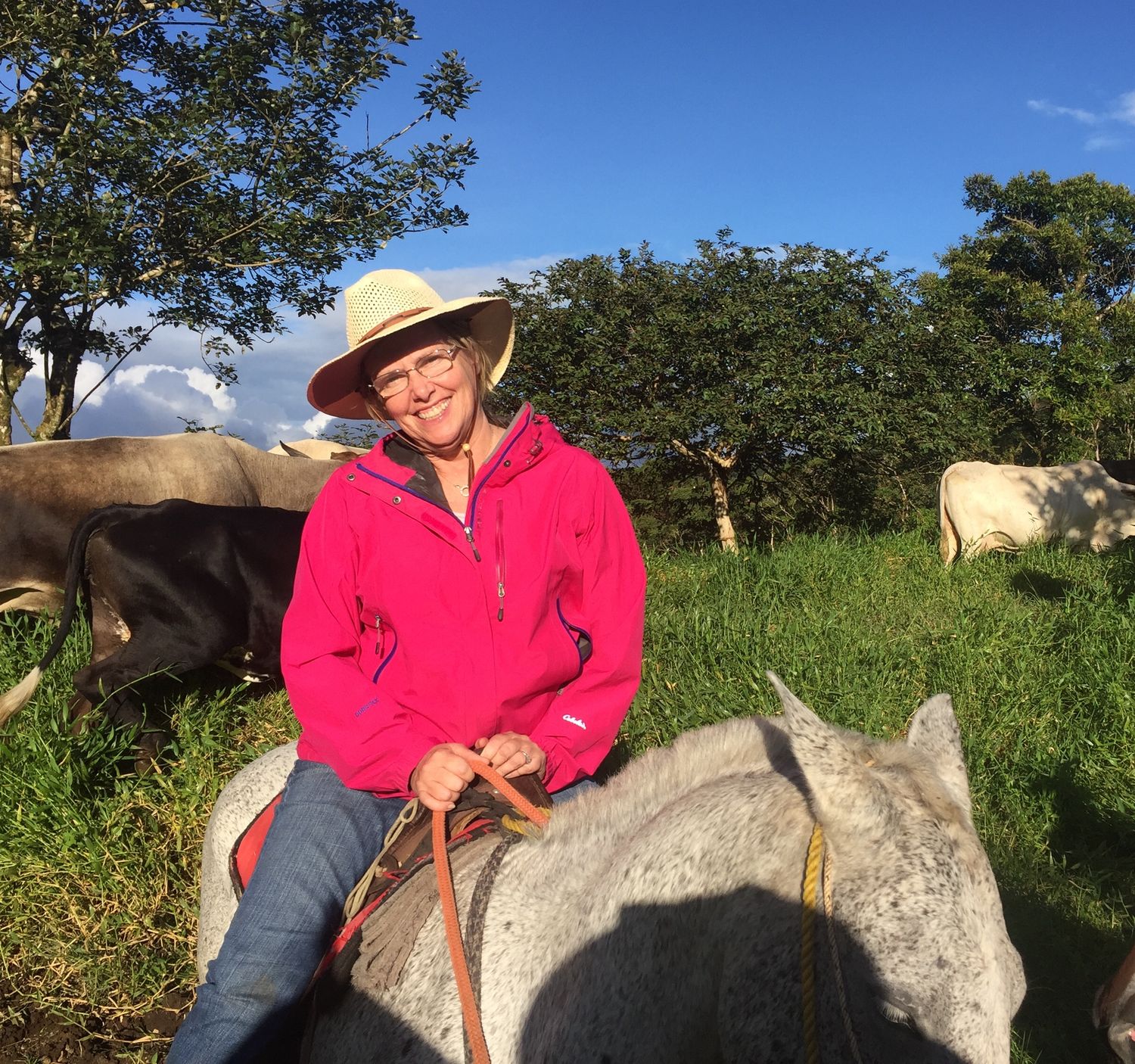
Costa Rica — all smiles after one very memorable ride
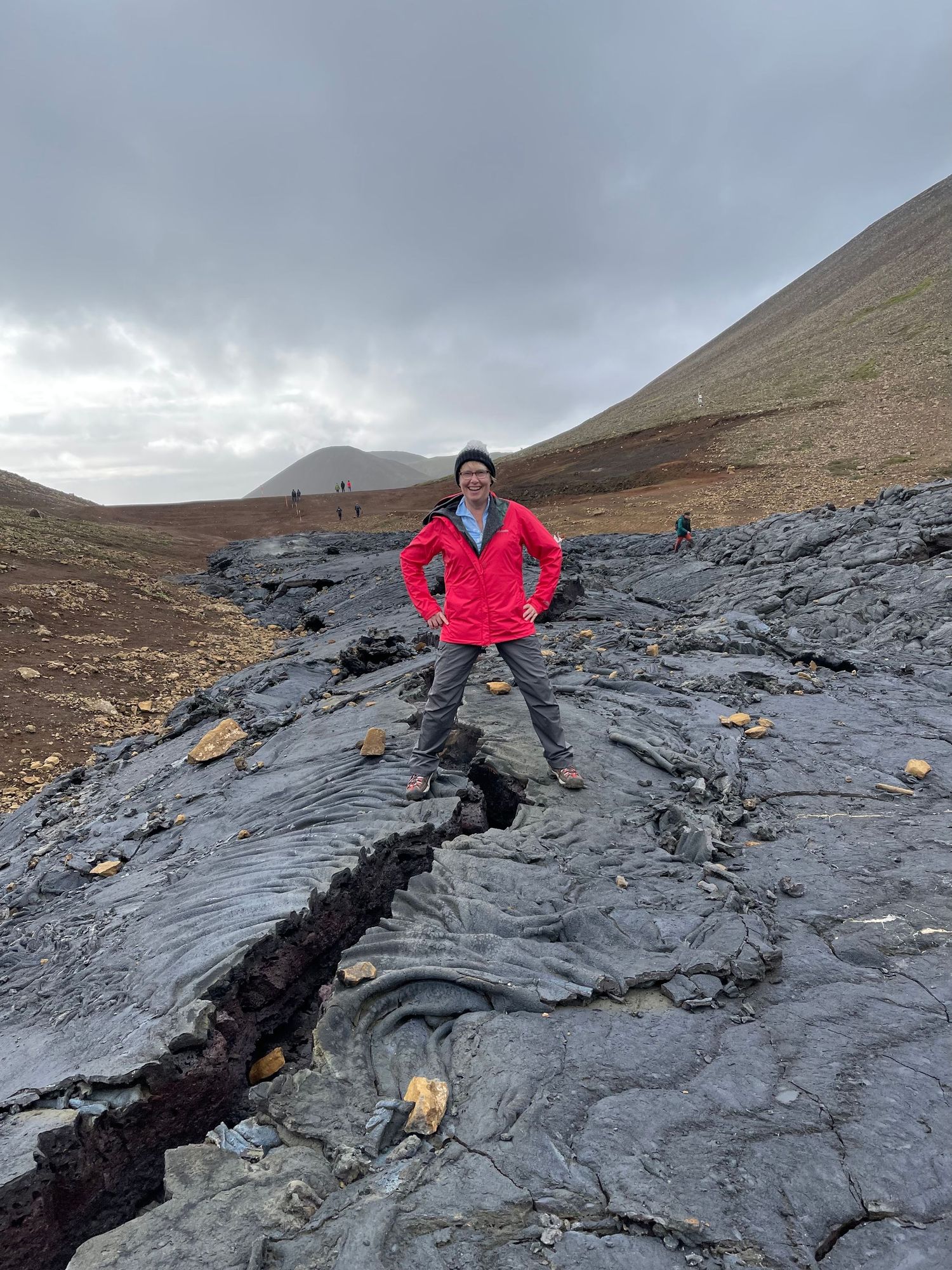
Iceland, 2021
Debbie arrived in Iceland at an extraordinary moment, when the world was only beginning to open again. With few tourists around, she explored an almost otherworldly landscape—standing between tectonic plates, walking near a recent lava flow and watching steam rise from the earth beneath her feet.
For someone who had spent a lifetime reading about faraway places, this was the kind of experience she once could only imagine.
Before She Could Go, She Read
Long before Debbie could travel the world, books took her there.
As an only child, she remembers being lonely at times. Laura Ingalls Wilder and Little Women were childhood favorites, but reading became much more than entertainment. Books opened doors to lives and places far beyond her own.
“I would lose myself in a book as if I was a character,” she told me.
As she grew older, books continued to expand her world. They introduced her to people who lived differently, thought differently and faced circumstances unlike her own. Debbie believes reading helped her develop empathy and a greater understanding of people.
But books taught her something else, too.
Again and again, she encountered stories of people facing adversity, finding courage and beginning again.
“I think I developed a belief that adversity could be overcome with fortitude and resilience. I learned that one could reinvent themselves after calamity.”
Those weren’t simply ideas Debbie admired on a page. Eventually, life would ask her to put them into practice.
At 38, Debbie lost her husband and her father to illness within three months of each other. Her children were only nine and seven. During her husband’s illness, she also needed to make a career change, leaving teaching for banking in order to secure medical insurance for her family.
It was an enormous amount to face at once. But somewhere along the way, Debbie learned something about herself and about what happens after life knocks you off your feet.
“Once I get my legs under me, I can move forward.”
Years later, when Debbie faced cancer, that resilience would be tested again.
Through difficult periods of her life, books had remained a dependable escape to better places. But during chemotherapy, even reading—the refuge she had always counted on—became impossible.
Perhaps that’s part of what makes the life she has created since then feel especially meaningful.
Long before Debbie could explore the world for herself, books had taught her that life could be larger than the one immediately around her. They had also taught her that a life interrupted did not have to be a life ended.
Debbie would discover for herself that it was possible to begin again.
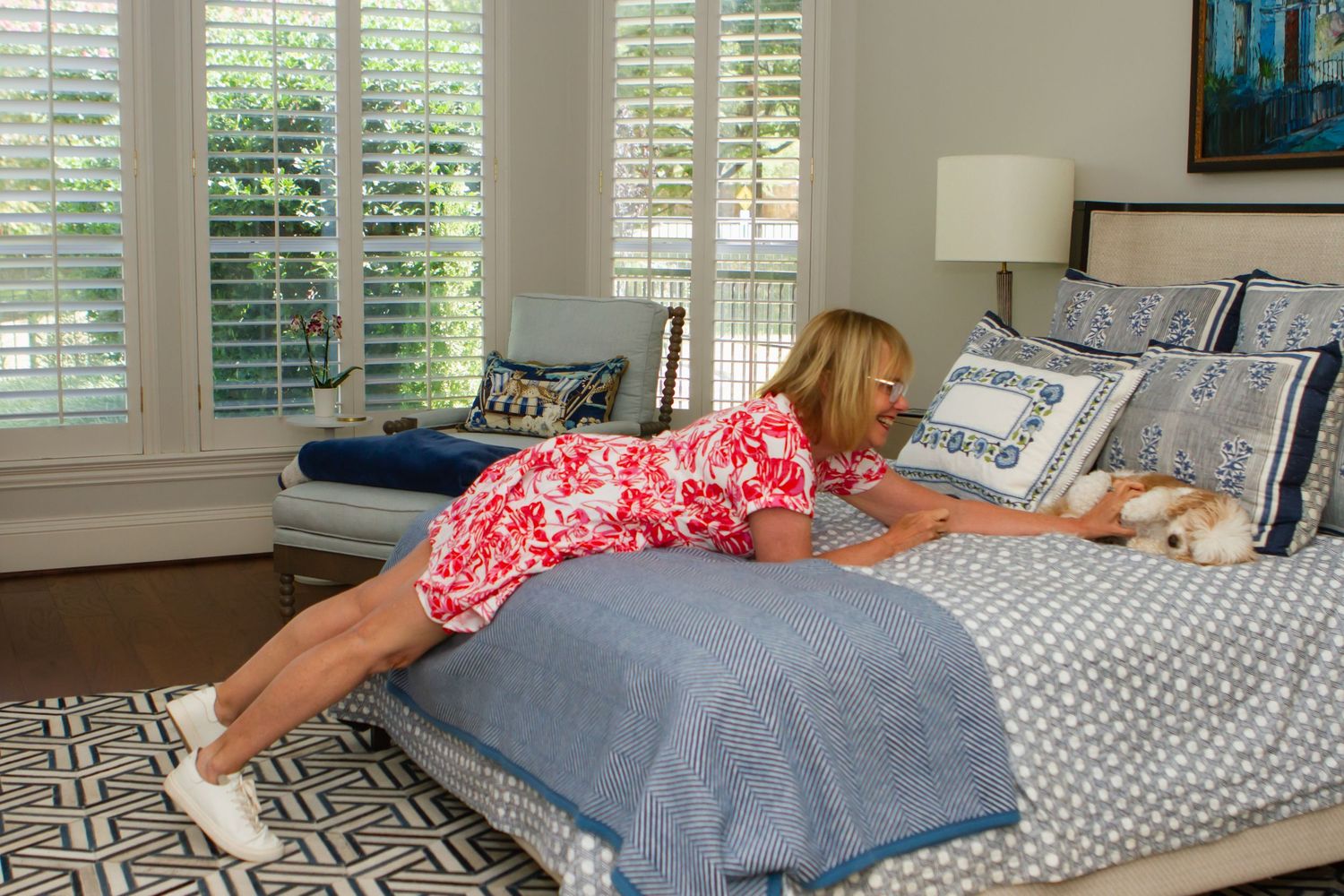
And then there is the joy of an ordinary day.
The People at the Center
For all the places Debbie has traveled and all the things that continue to capture her curiosity, the people who matter most are much closer to home.
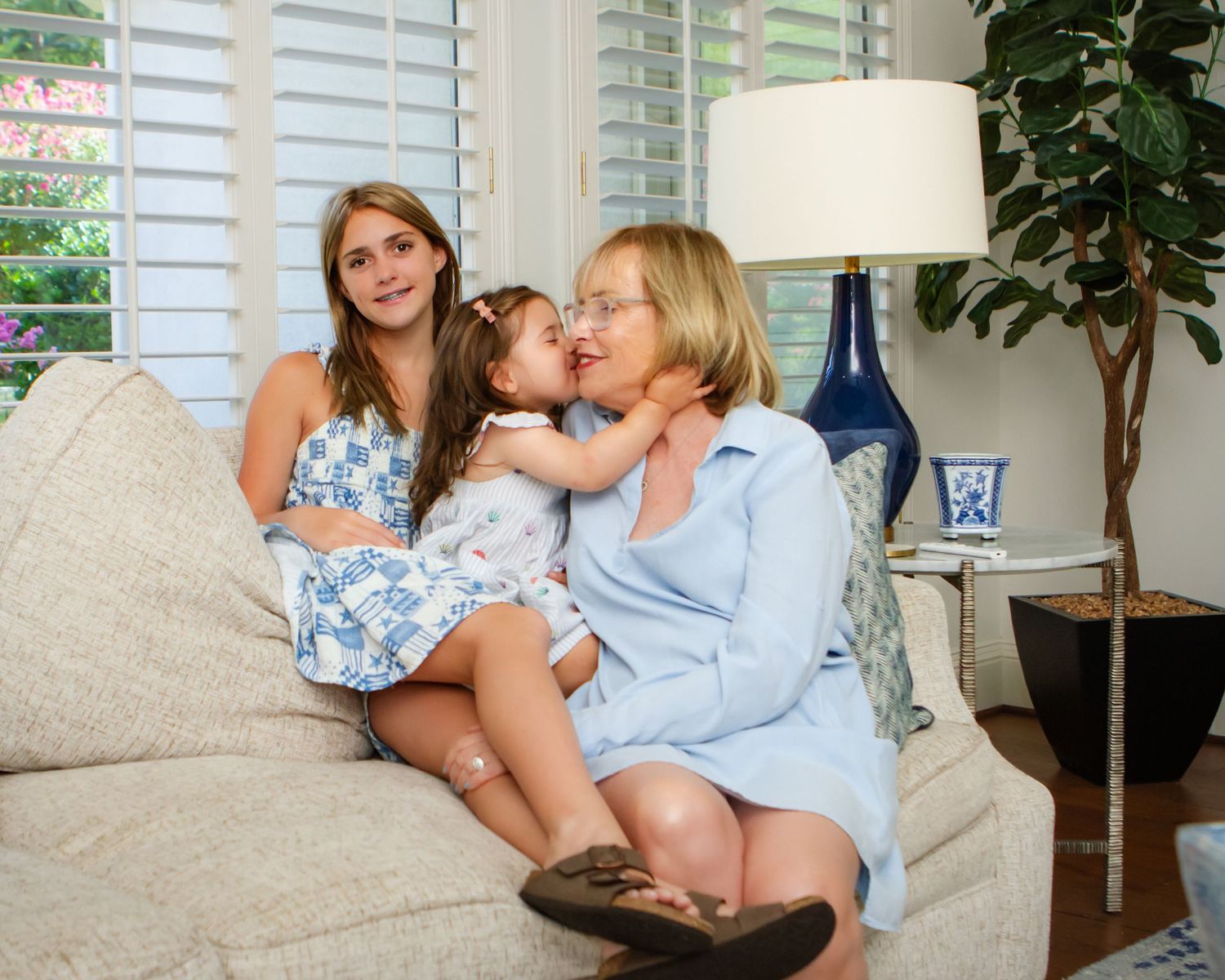
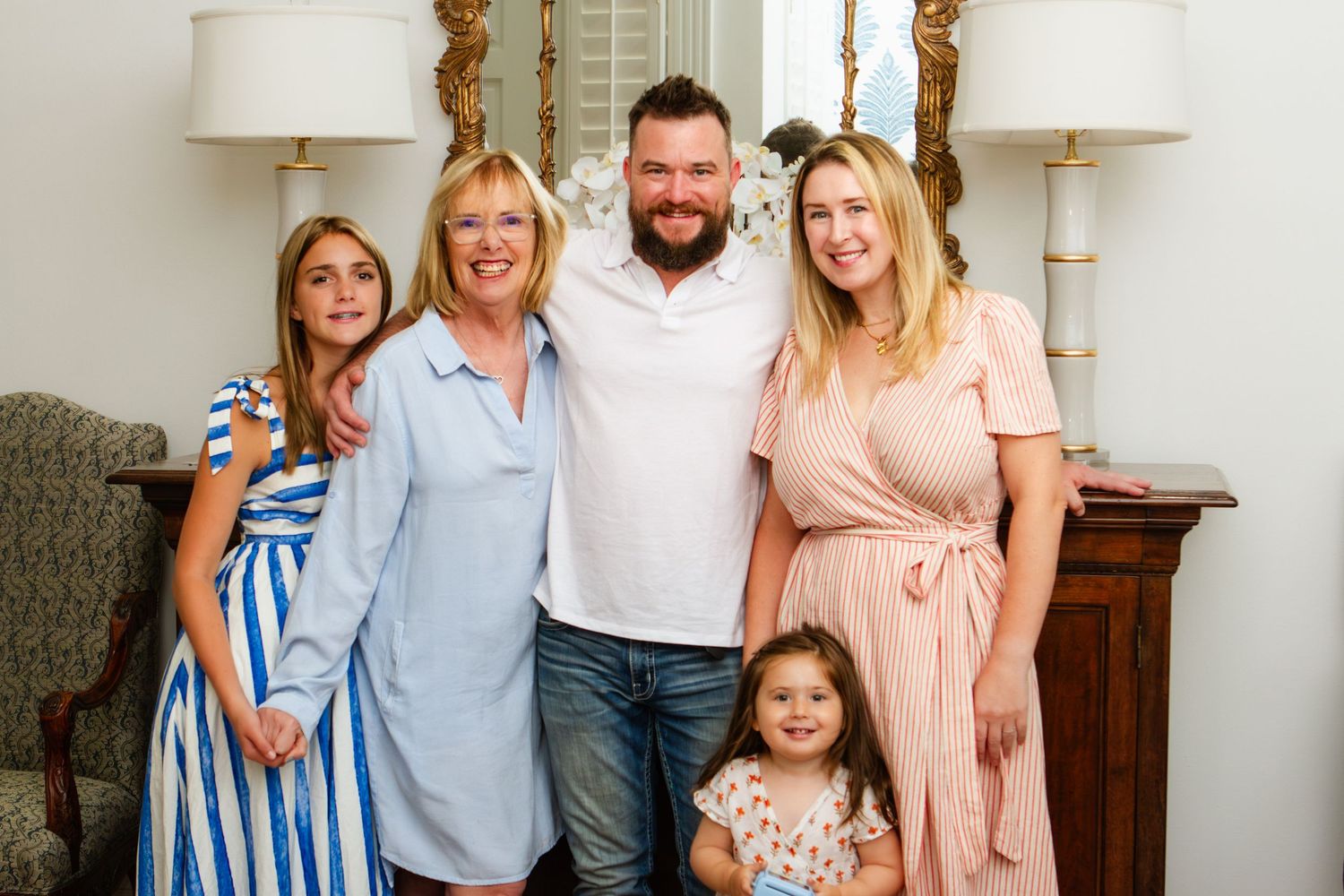
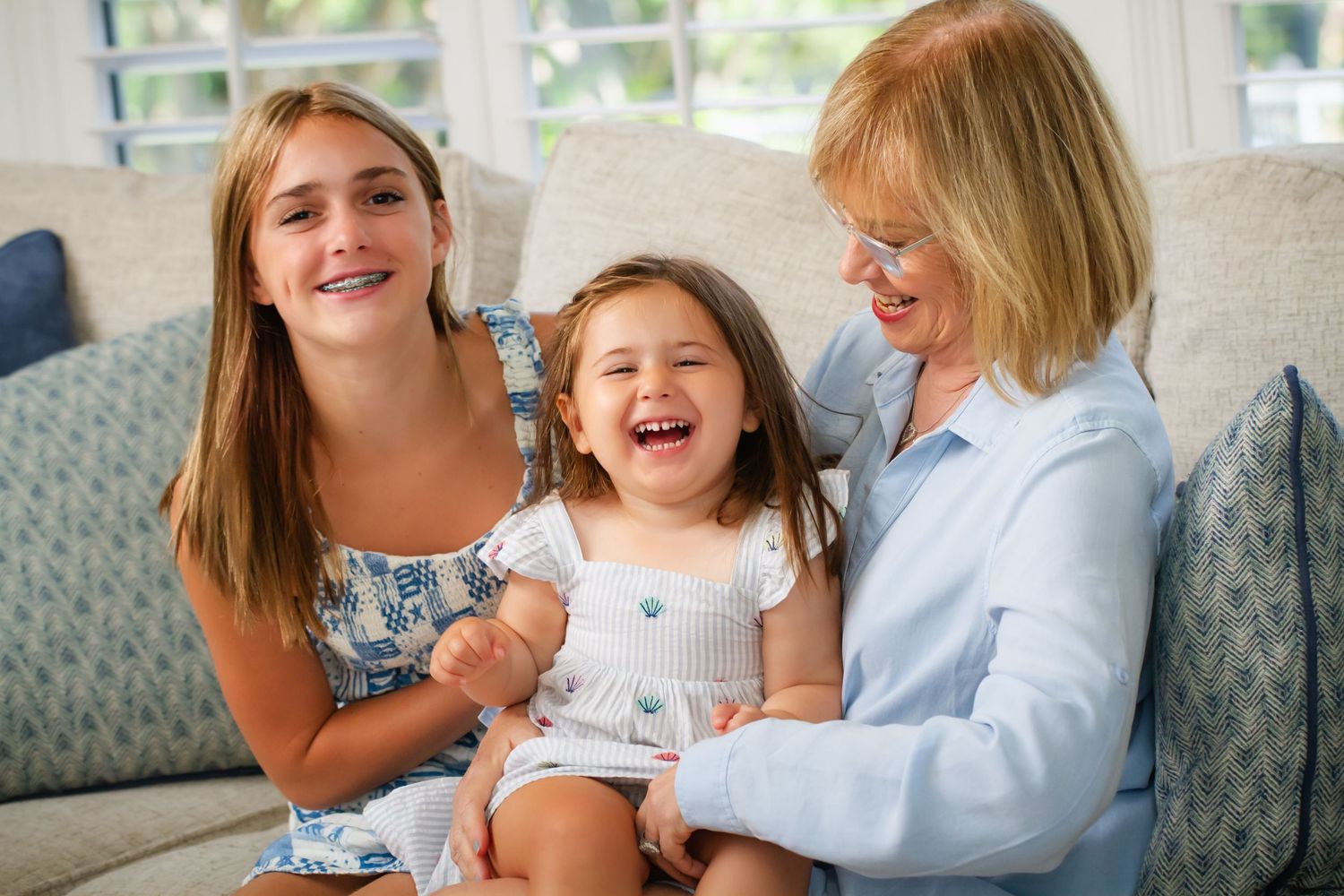
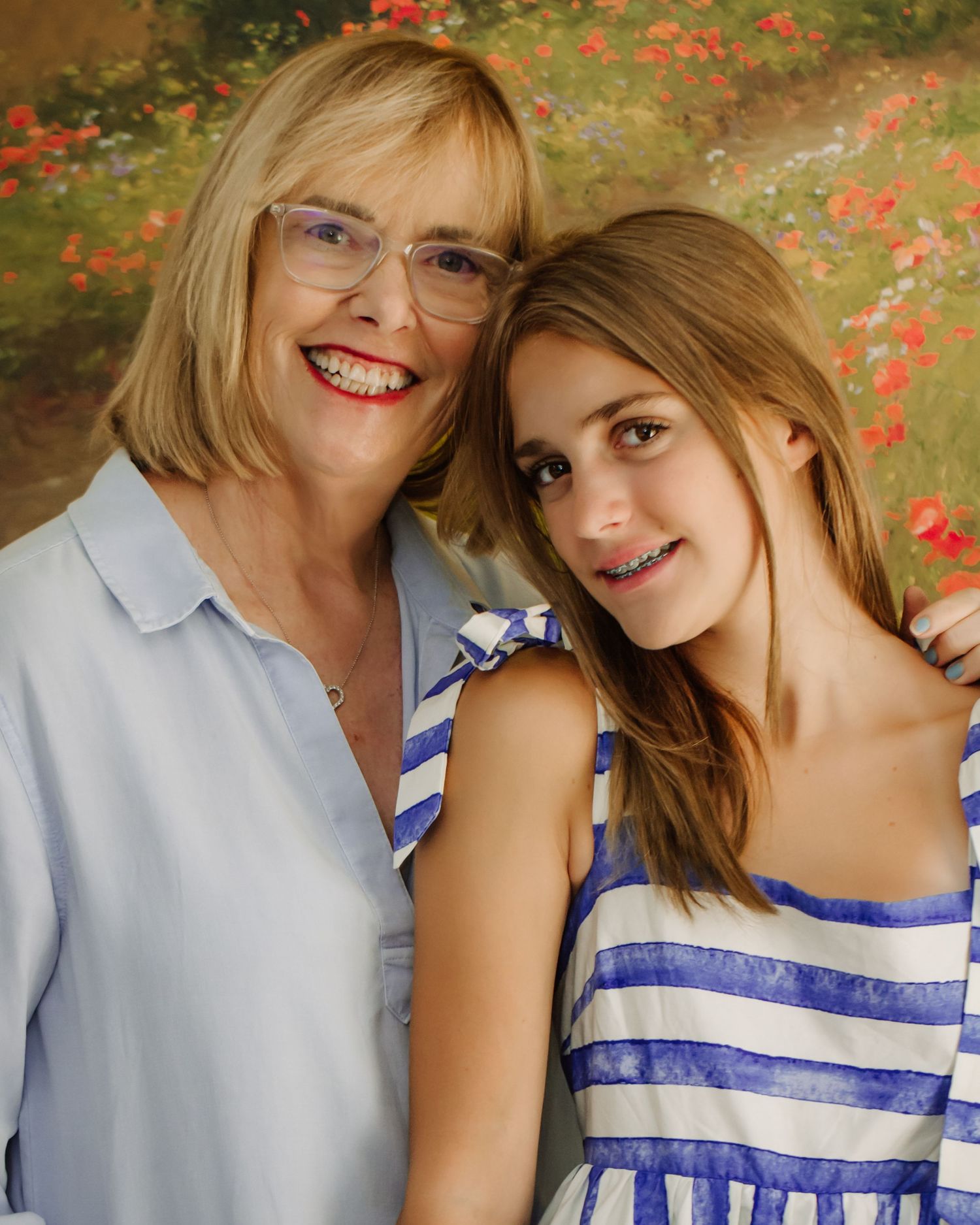
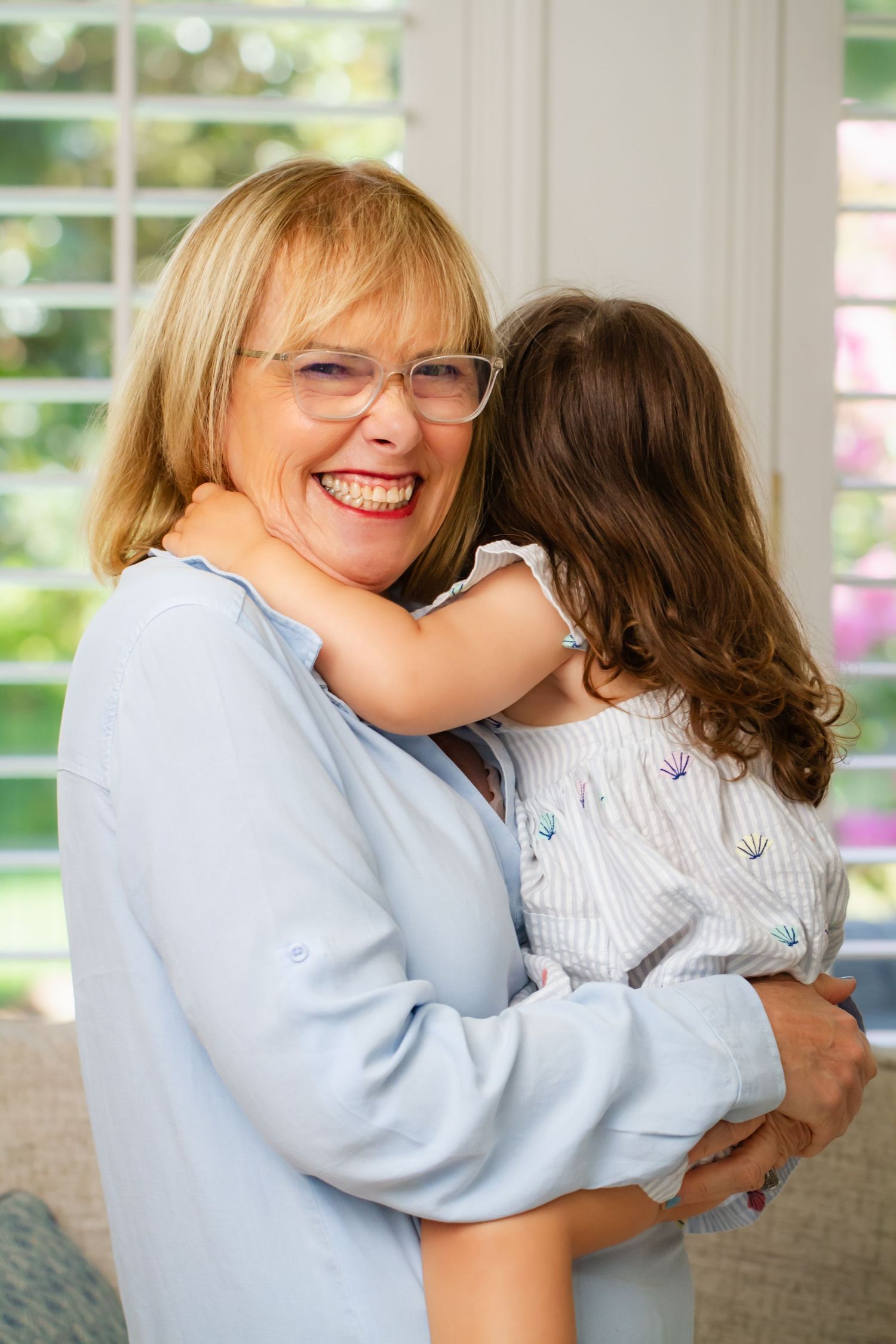
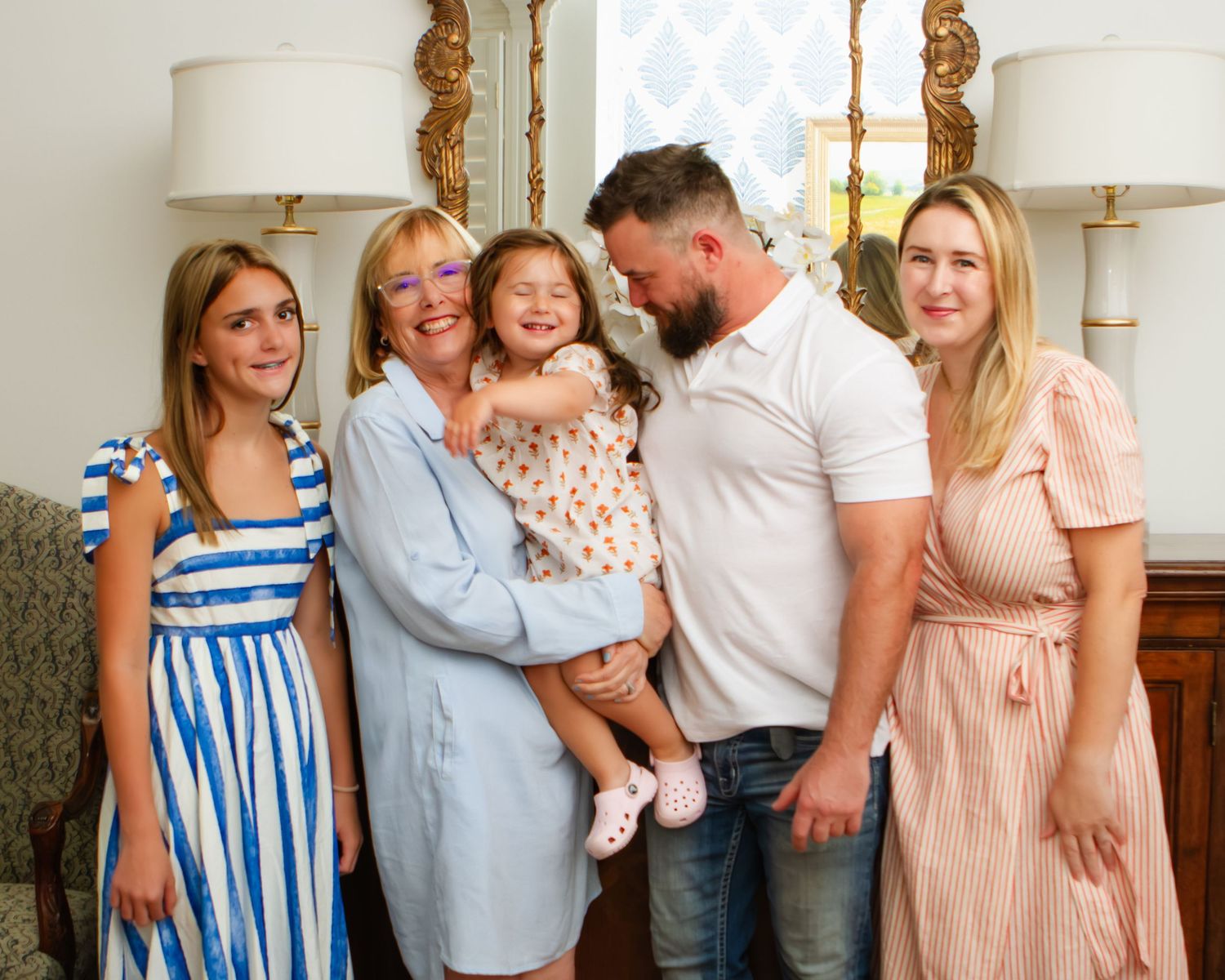
She has two granddaughters, Avery, 13, and Mila, who recently turned three. They are at very different stages of childhood—and Mila lives with her family all the way in England—but both clearly have a place at the center of Debbie’s heart.
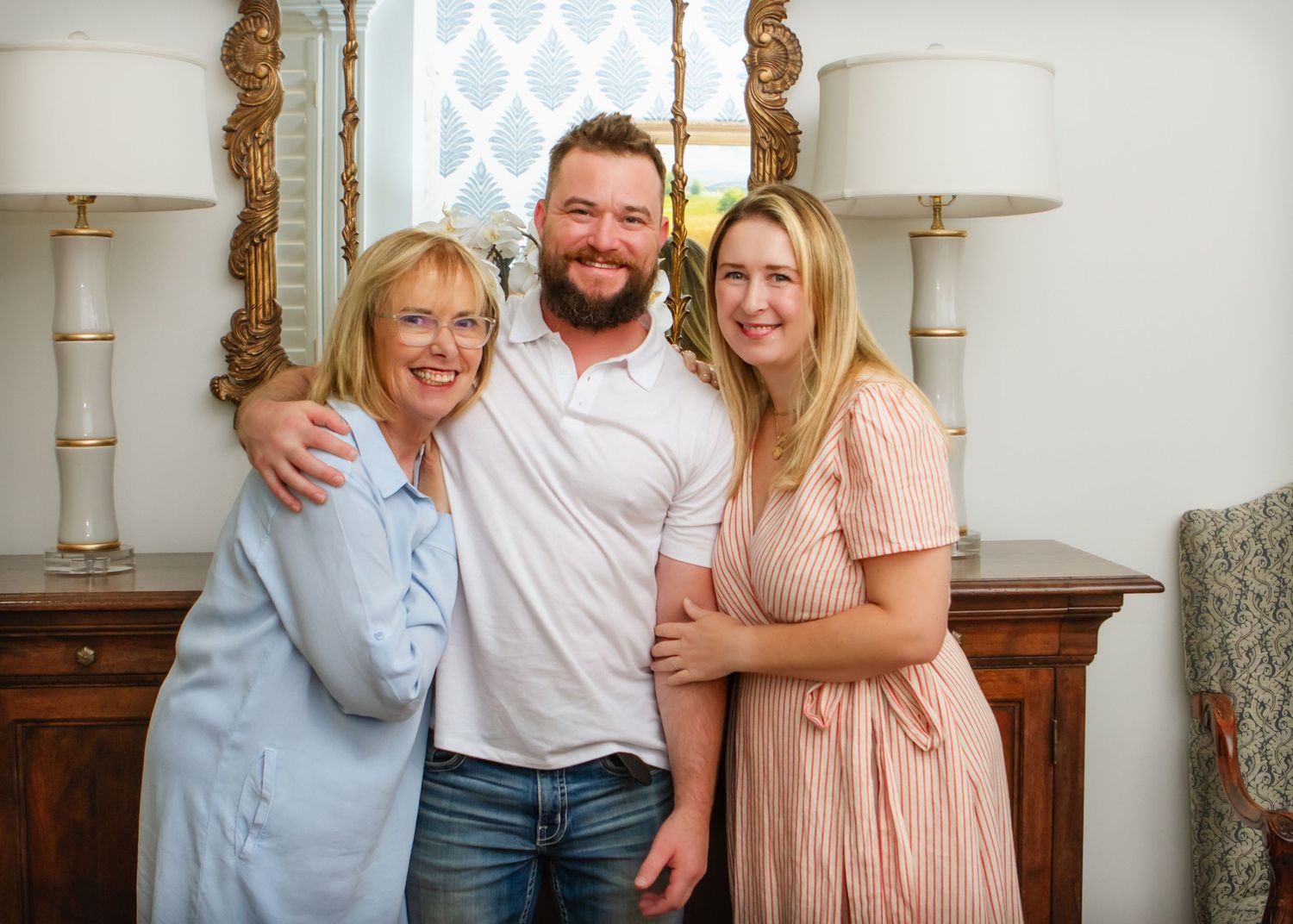
Avery was visiting when I photographed Debbie, and I had the chance to watch the two of them together. Debbie’s daughter was there with little Mila, and Avery’s dad was there too. Having both of her children and both granddaughters together gave me a chance to photograph something that mattered even more than the beautiful home around them—her family.
At one point, Debbie pulled out a book Avery had made especially for her, filled with photographs and memories. It was the same book we’d photographed earlier in the day, but once I knew who had made it, it meant something entirely different.
And then there were the moments I didn’t have to arrange at all.
A granddaughter reaching up to hold Debbie’s face. A kiss. Laughter. Family gathered together.
Those are the photographs I love most.
Still Becoming
Debbie turns 70 on August 30.
There is something fitting about meeting Debbie just before she turns 70. She doesn’t seem particularly interested in looking back and taking inventory. She’s much more interested in what comes next.
There are more books to read. More places she wants to see. More rooms she may decide need changing. More time with the people she loves.
What I’ve come to appreciate about Debbie is that she hasn’t created her life all at once.
She has built it in chapters.
The curious little girl who escaped into books became the science teacher. The teacher eventually found her way into real estate. Real estate uncovered an instinct for design. The girl who imagined faraway places eventually stood in them. And the woman who learned through books that adversity could be survived eventually had to prove it to herself.
Maybe that is the art of making a life.
Not having it all figured out from the beginning, but being willing to keep learning, changing, beginning again—and trusting yourself enough to see where the next chapter leads.
After spending time with Debbie, I think what stays with me most is not any one part of her story, but how naturally all the parts seem to belong together.
Her home may be filled with beautiful things, but what you really see when you look around are the places she’s been, the people she’s loved, the things she’s learned and the life she’s made along the way.
And at almost 70?
She’s still making it.